Cliffe Lab

Investigating the molecular mechanisms of Herpes Simplex Virus latency and reactivation, and neuronal specific immune responses.
Herpes simplex virus (HSV) is a human pathogen that persists for life as a latent infection of neurons. In the Cliffe lab we are trying to uncover the mechanisms of persistence by studying the fate of the viral DNA genome in neurons. We also investigate how HSV reactivates from latent infection to cause disease. Finally, because the virus persists in a highly specialized and essential long-lived cell type (a neuron), we use HSV as a tool to investigate neuronal specific responses to immune stimuli.
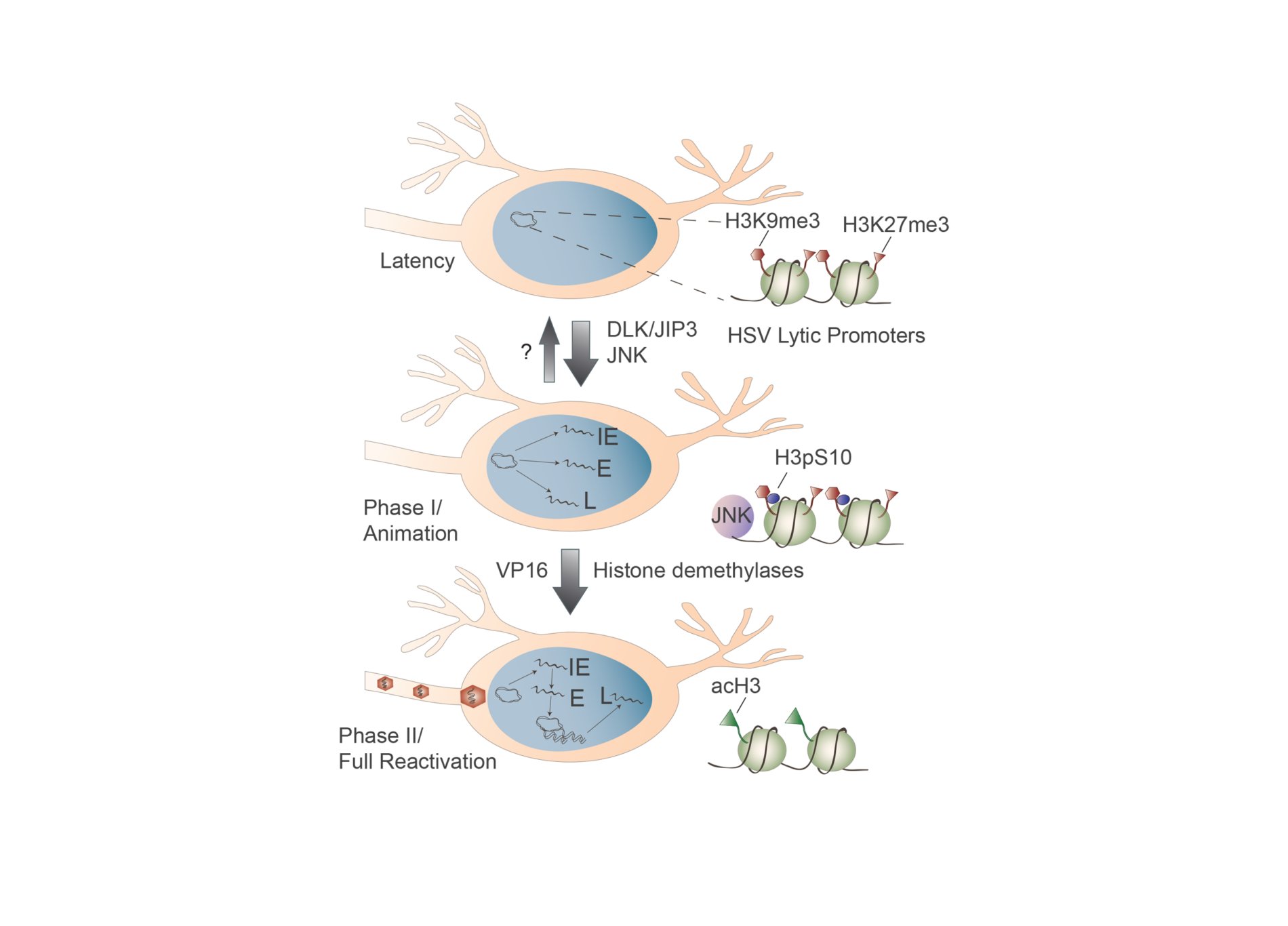 Mechanisms of HSV reactivationRead More
Our lab has developed novel in vitro models of HSV latency. Using these models, we have discovered a neuronal pathway involving activation of c-Jun N-terminal kinase (JNK), common to many stress responses, that is essential for initial HSV gene expression during reactivation. We have also found that this pathway can be activated in neurons by immune-mediated hyperexcitabilty. JNK-dependent reactivation results in a specific change to the HSV epigenome known as a histone methyl/phospho switch, which can permit gene expression to occur from repressive heterochromatin. Our studies therefore answer long-standing question as to how viral gene expression can initiate to trigger HSV reactivation.
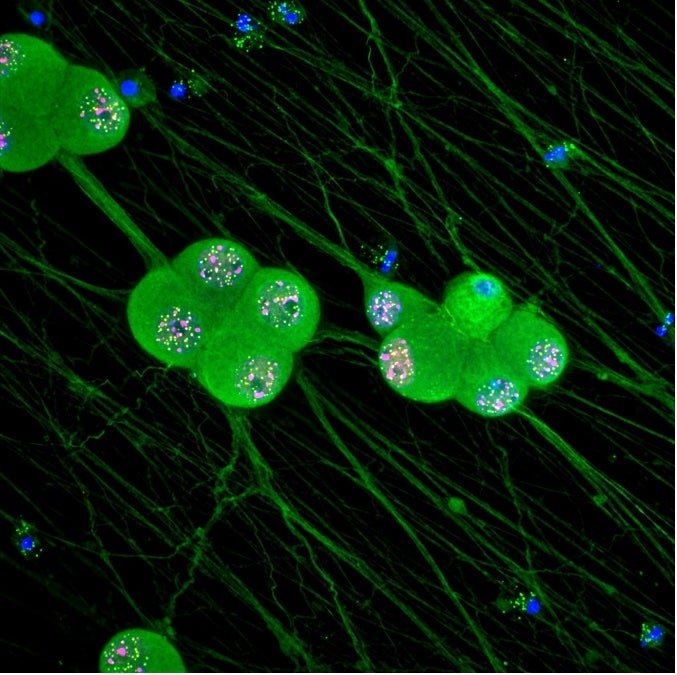 Latent HSV genomes have memoryRead More
Our lab has shown that the HSV-1 latency and reactivation can be impacted by the state of the neuron during initial infection. In one study, we showed that exposure to type I IFN during initial HSV infection resulted in a repressive form of latency that is unable to reactivate. We found this was due to the formation and association of viral genomes with PML nuclear bodies. In a recent study, we have found that cell stress during initial infection has the opposite effect and results in latency that is more capable of reactivating. Both these studies highlight how neurons and the viral genome possess memory of previous stimuli. We are working on how these intersect with epigenetic changes to the host and/or virus.
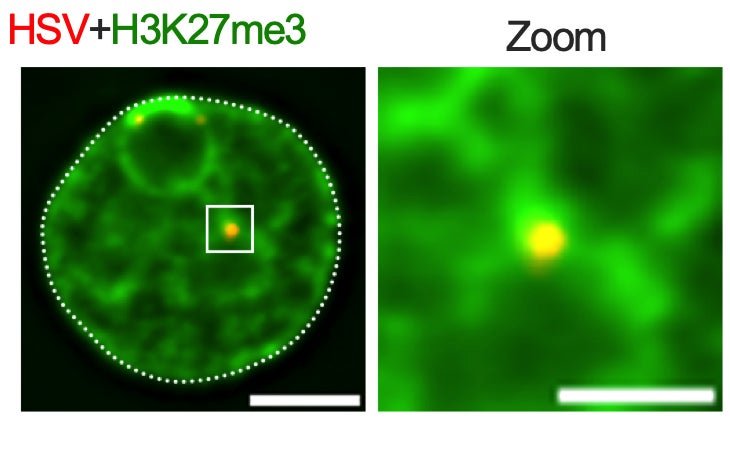 Epigenetics of HSV infectionRead More
The outcome of HSV infection is linked to the type of chromatin associated with viral genomes. Our lab is investigating the mechanisms by which host and viral factors impact chromatin association following entry of naked viral genomes into the nucleus of different cell types. We are also interested in the mechanisms of remodeling during reactivation, especially during initial exit from latency, and how the type of silent heterochromatin on latent genomes impacts the ability of the virus to reactivate.
News
Lab News