Resident Lifestyle
A Day in the Life
To get a sense of what your days might look like during your own diagnostic radiology residency at UVA, read about a day in the life of two diagnostic radiology residents (Dr. Nicole Kapral and Dr. Xavier Mohammed) or IR residents Dr. Yasser El-Abd and Dr. Sara McCann.
Nicole Kapral, MD, was a Diagnostic Radiology resident (and chief resident in her final year) who graduated in 2022.
7:15 – 8:00 am: Case Conference
I arrive at Moss Auditorium with my famous Charlottesville Bodo’s Bagels breakfast sandwich just before 7:15 am so I can chat with my friends for a few minutes before conference begins. Dr. Jonathan Nguyen, one of our breast imagers, is presenting interesting and classic mammography cases. I volunteer for the first case, stating the type of exam, relevant findings, a differential diagnosis and BIRADS category with respective follow-up recommendations. It can be intimidating, but everyone is supportive and encouraging, trying to make sure we all get the most out of each case. Afterwards, the attending points out the relevant findings and how they would have approached the study. My favorite part of mammography is that there are regulated standards to ensure we are giving patients the best care possible and recommending the appropriate amount of follow-up imaging or biopsies to catch as many cancers as possible. While on the mammography rotation we are integrated into the care team reading mammograms, performing biopsies on patients and calling with results.
No matter who is presenting, morning case conferences are a low-stakes and engaging way to practice radiology with instant feedback. After conference, we linger to chat for a few minutes then run to grab (or refill) our coffee before reporting to our assigned clinical services.
8:00 am – noon: Clinical Service
I am assigned to abdominal imaging where I get to start reading and interpreting adult ultrasounds. This is a great rotation because we get to hang out in the newly renovated body reading room with multiple TV monitors and colorful lighting throughout the room. I also enjoy breaking up t
he day by spending part of my time reading ultrasounds and part of my day performing ultrasound guided procedures such as paracentesis or liver biopsies, just to name a few.
The other residents all report to their various rotations including pediatrics, body, breast imaging, thoracic, interventional radiology and more. My friend Anson Chen is currently on pediatric imaging where they read plain films, CTs, ultrasounds and MRIs. In the morning, he will walk to the outpatient center with the attending where they are performing contrast-enhanced voiding urosonography, a recently approved technique which replaces VCUGs (voiding cystourethrograms) and avoids radiation in children.
Our job is so much fun because there are multiple aspects to it aside from just reading images. We perform various procedures, speak to patients and clinicians, complete study protocols and teach medical/nursing students.
Noon – 1:15 pm: Noon ConferenceAll that excitement can make a resident (me!) pretty hungry. Noon conference is the time for us to step away from the screens, get some food, meet back up with friends and listen to a lecture from one of our many great faculty members.
First things first – the food. If you don’t want to pack lunch or go to the cafeteria, ‘The Corner’ is right across the street with a variety of food options; Roots’ giant salad bowls are probably one of the favorites (I’m not the only one – we’ve set up a location in the hospital for bulk deliveries).
Lecturing today is Dr. Juliana Bueno, giving one of many of her many amazing presentations on thoracic imaging. The lecture topics generally rotate by specialty each week, with individual days focused on a variety of topics to help us improve our clinical skills as well as prepare for future board exams. They’re full of useful facts and images from cases the faculty have seen over the years, which keep residents engaged and interacting.
1:15 – 5:00 pm: Clinical Service
A little less hungry, I return to the body reading room and continue the work from this morning. It’s typically more of the same responsibilities, but more exams have been ordered and more people have come into the Emergency Department while I was away. I work hard to read all the ED and inpatient exams. Though we read as much of the list as we can, education comes first, and we are responsible for learning more than emptying lists. Once 5:00 pm rolls around, I make sure there are no emergent studies left, sign out anything I have pending, and my work is done for the day (usually) . . .
5:00 – 8:00 pm: Swing Shift
Tonight, I’ll be sticking around until 8:00 pm for a swing shift with my friend Neal Desai. We do these shifts about once a week or every other week after first year. From 5:00 – 8:00 pm, the two of us are “on call,” meaning we interpret all the imaging studies for the Emergency Department and inpatients during this time.
It’s usually a busy couple of hours, but it’s also a time that we learn and grow the most. We are signing reports with less supervision and make more of our own clinical decisions. Though it can be stressful at times, we learn to be quick and efficient, communicate with providers and trust ourselves.
Tonight, I’m reading CTAs and CT chest/abdomen/pelvis while Neal reads radiographs, CTs of the brain and spine and ultrasounds. Even though we’re assigned separate studies, we’re always willing to help each other out if someone sees something new or has a question. This call shift allows for autonomy, but there’s always a fellow or attending available if we get in a real bind.
8:00 pm: The Day Ends
Yay, swing shift has ended. The two nighttime residents come in to take over, doing essentially the same thing we just did on swing, but from 8:00 pm – 8:00 am.
I head home to see my kids before bed and prepare for the next morning. Some people are off to the gym or to get dinner (no way I can wait until 8:00 pm for dinner). I set my alarm, eager to see all my coworkers/friends and find out what exciting cases await me tomorrow.
Dr. Xavier Mohammed was a Diagnostic Radiology resident in the Early Specialization in Interventional Radiology (ESIR) track, who graduated in 2023 and joined UVA's IR-Independent Residency the year afterwards.
6:30 – 7:15 am: Wake Up!
My alarm goes off at 6:30am. I hit snooze. It goes off again at 6:35am. I guess it’s time to get up! I roll out of bed and grab some fruit, yogurt and coffee. At 7:00am, I grab the rest of my stuff: my badge, phone pager, and most importantly a face mask. I make my way to the hospital. I truly enjoy my daily 15-minute walk through beautiful Charlottesville – I get an amazing view of the mountains on my hilly stroll to work, prepping me for a busy but super fulfilling day of radiology!
7:15 – 8:00 am: Case Conference
Tuesday through Thursday we have case conferences in the morning before work. In the past we would have all forty residents sit in Moss, our dedicated radiology auditorium, while an attending or fellow pulled up interesting cases to go over. These days, our faculty have made an impressive effort to keep us safe and distanced while ensuring our education continues. So this morning just ten residents, who have signed up prior to the conference, sit in Moss. Seats are assigned in such a manner to ensure we are all at least six feet apart. The other residents tune in virtually from different locations, such as the resident lounge or reading rooms.
Today we have Musculoskeletal conference, one of my favorites! Dr. Nicholas Nacey, one of our MSK attendings, runs the show. He pulls up a case and I summon the courage to volunteer to take on this first case of the conference. It’s an MRI of the shoulder, my favorite joint in the body! I quickly name the planes and sequences of the images, then move on to systematically assess each part of the joint. Dr. Nacey provides encouragement along the way. Rotator cuff tendons? Normal. Glenohumeral ligaments? Normal. Labrum? I think it’s torn! I stick to my gut instinct. When I’m done reaching to my conclusion, he gives me feedback on what I did well and what I could work on for next time. He then pulls up the second case, and one of my colleagues volunteers virtually to take it on. Eventually it’s 8:00am, and while our attendings seem to have an unlimited number of great cases up their sleeve to go over, we are let out to each go to our respective services for the day.
8:00 am – noon: Clinical Service
Today I am on ultrasound. Each of my fellow residents goes to the other subdivisions: chest, musculoskeletal, pediatrics, just to name a few. I stay in Moss, which is where we have our body procedure ‘huddle,’ where we review all the ultrasound and CT procedures for the day and assign cases. Sara, our mini-fellow, assigns us our cases for the day. After huddle, I make my way to the body reading room, where all body ultrasounds, CTs, and MRIs are read. As I enter, I see the fellows and attendings at their stations, all masked up. I log onto PACs, grab some high priority cases, and start cranking through them. There is always quite the variety: rule out ectopic pregnancy, concern for cholecystitis, deep vein thrombosis study, etc. I try my best to go quick, as these can be emergent cases, without compromising accuracy.
When I get a break, I grab Dr. Arun Krishnaraj to go over the cases. I like reading out with Dr. Krishnaraj because he almost always brings up some new literature that is very interesting and super helpful for expanding my practical knowledge base. Just as we finish reading out, I’m paged by one of our radiology nurses for my chest tube placement. I confirm the patient is COVID negative, then head over and introduce myself to the patient, who has been struggling with recurrent pleural effusions due to cirrhosis. We are hoping the chest tube will ease his chest pain and shortness of breath. After consenting him, I clean and prep him. The procedure leader for day, Dr. Rebecca Dameron, pops in and we start the procedure. My ultrasound probe immediately shows a large effusion. I steady my probe between two rib shadows, do a quick Doppler shot to confirm there aren’t any blood vessels in my way, and numb down to the pleura with lidocaine. I give it a second to set it, then use my needle to guide my chest tube into the pleural space. Once I’m in I pull my needle out, suture the tubing in place, pull some fluid for labs, and attach my tube to suction. Soon after, my patient begins noting improvement with his respirations. It’s very fulfilling to be providing patient care on both the diagnostic and therapeutic ends of medicine, splitting time between reading images and doing image-guided procedures.
Noon – 1:00 pm: Noon Didactics
At noon, the fellows/attendings keep lookout for high priority scans as the residents break for lunch and didactics. 12:00-1:15pm is always protected; the attendings do a great job of maintaining that. I grab some sushi and soda from the cafeteria, then make my way back to Moss auditorium. Once again, it’s just ten residents in the room, spaced out so that we can unmask and eat while maintaining safe social distancing. Soon Dr. Auh Wan Park, one of our interventional radiologists, walks in and pulls up his presentation. Just like for case conference, the other residents log in remotely to this didactic lecture. But this is a different sort of learning: we listen in rather than actively trying to go through cases. Both ways of learning are vital to radiology.
Today, Dr. Park is going over the pros and cons of different types of gastrointestinal bleeding imaging. By the end of the lecture, I feel I have a better grasp on recommending the appropriate study when a concerned physician is worried about a GI bleed in their patient: Tagged RBC scan, CTA or angiogram. In the final five minutes, Dr. Park reminds us to stay positive and vigilant in our work in the hospital during this difficult time. I really like how he ended lecture on such a nice and considerate note!
1:00 – 1:15 pm: Break
Once the lecture ends, I head outside for a few minutes to get some fresh air, stretch my legs and soak in some sunlight after all that time in the dark! We always have a few minutes after conference to take a short break to catch our breath before resuming our work.
1:15 – 5:00 pm: Clinical Service
Soon I’m back at work once again. I quickly do a fine needle aspiration on a large thyroid nodule and do a liver biopsy to finish up my procedures for the day. Afterwards, I continue to tackle as many high-priority ultrasounds as I can, as this is what I will see when I am on call. Things slow down a bit in the afternoon, so I get a chance to grab some outpatient ultrasounds as well, such as transplant follow ups, thyroid nodules and menorrhagia work ups. I do a few more read outs with Dr. Krishnaraj, making mental notes along the way of things I could improve in. Before I know it, it’s five o’clock and the work day is over! I see the swing shift residents migrating into the body reading room for their 5:00 – 8:00 pm shift, which we each take every two to three weeks. The rest of us slowly trickle out as we finish up our dictations.
5:00 – 6:00 pm: Work Out!Every day I commit 9 – 10 hours to the mental exercise that is radiology; now it’s time for some physical exercise! As an active person and competitive athlete, Charlottesville is a perfect place for me. The pandemic hasn’t changed the fact that it’s such a beautiful place to workout. I make my way to a clear patch of grass on the ‘The Lawn.’ After some quick stretches, I blast out some push ups, pistol squats and pull ups, using one of the trees as a pull up bar. These days I have to improvise with my workout routine a bit! After my bout of strength training, I practice a variety of flips and tumbling maneuvers on the soft, well-manicured grass. I see other people from a distance working out too; some are running, others are also doing calisthenics, and some are just taking a casual walk with their dog.
6:00 – 10:00 pm: Relax and Study
After working out, I head back home to clean up, cook and wind down for the day. Next week I start neuroradiology, so I spend sometime reviewing my neurovascular anatomy as well as some MRI basics. Afterwards, I give my parents and younger brothers a quick call. My parents notice me yawning quite a bit – I guess it’s time for sleep! I tell them goodnight, set my alarm for 6:30 am, and shut my eyes…
Drs. Yasser El-Abd (graduated in 2021) and Sara McCann (graduated in 2022), UVA Interventional Radiology Residents, say they have both gained many valuable experiences from their time in this residency program. The program is collaborative and flexible in nature, designed so that residents learn as much as they can in the time they spend with attending physicians, fellows, and other residents. Sara and Yasser gave us some inside details on what their days “on service” look like.
6:30 – 7:00 am: Preparation is Key
Still shaking off sleep, Sara and Yasser arrive at the hospital bright and early and make their way to the Radiology Department. They both grab a pair of grey scrubs from the scrub machine and head back to the IR Reading Room. This is time for residents to clear their heads, get focused, and prepare for the day.Both residents sit down at their stations and start looking up labs. The schedule for today is up on a large screen on the wall and the residents chat with one another about which rooms they think they’ll cover today.
The IR department has seven procedure rooms, which allows each fellow and resident on service to have their own assigned room. This means that residents have plenty of cases to experience and learn from- a huge perk of the program!
They pick their rooms and start looking up information about their patients and procedures. Soon the residents will be presenting their patients to the on-call attending physician. Preparation is key to ensure that they are aware of any potential patient issues and can discuss any anticipated challenges with the attending prior to the procedure.
The two residents munch on their breakfasts and listen to some music as they work. Soon it is just before 7, and both residents head upstairs to briefly visit their patients from the prior day before lecture to make sure their recovery is going well.
7:00 – 7:45 am: Lecture
The morning schedule includes time for a lecture where the residents review interesting cases and solidify key concepts. Dr. Fritz Angle, the attending on call today, walks in and the residents pull up chairs around the projector screen in the IR reading room. Dr. Angle pulls up a complex case from the other day and calls on Sara to scroll through the images and describe the findings. Yasser takes over next and is asked to give the diagnosis and possible treatment options. A fellow then goes through the steps of the procedure and answers questions about potential challenges.
Sara and Yasser both love this collaborative method of dissecting cases. Because the discussion is geared to each resident’s level of knowledge, it allows everyone to learn from each other and receive educational benefit, whether a first year resident or IR fellow.
7:45 – 8:00 am: Running the Board
Sara and Yasser both pull up notes for their patients and anxiously wait for their turn to present. For each case, they rattle off the patient’s medical history, the reason for their procedure, prior imaging findings or procedures, and the plan for the patient today. They will also discuss any potential patient or procedural issues. “And ALL of this occurs before 8 am,” says Yasser with a laugh.
8:00 am – 5:00 pm: Scheduled Cases
Just like that, it’s time to get today’s cases started. As patient’s arrive, they are directed to the pre-procedure area. Yasser and Sara look to the board to find where their first patient’s are located and head off to meet them. They head into the room and give a friendly introduction to the patient and any accompanying friends and family. They then go over the patient’s medical history, perform a focused physical, answer any questions, and review the consent form for the procedure.
Next, they let the nursing and tech staff know the patient is ready, and the nurse brings the patient back to the procedure suite. Sara and Yasser assist the techs in prepping and draping the patient. Finally, the attending enters, and the entire team does a final “time out,” which is one last safety check with the patient before the procedure. The nurse administers medications to keep the patient comfortable during the procedure and the resident and attending work together to complete the case.
Yasser eagerly explains that he enjoys training at UVA because of the level of resident involvement and collaboration during cases. As a resident, he is able to take part in a wide variety of cases and is given the autonomy to perform a large portion of procedures on his own—all under the attending physician’s supervision.
At the end of the procedure, the patient is brought back to the post-procedure area for recovery. The residents accompany the patient back to the post procedure area and then head back to the IR reading room to dictate the case. Shortly after, they head off to the pre-procedure area to meet their next patient and to check in on their first patient.
As Sara and Yasser go from case to case, they take a break and grab lunch or a snack when they can. They explain that while their schedule is fast-paced, it also can be flexible. If time allows, they try to join in the daily lunch lecture in the department auditorium and catch up with some of their diagnostic colleagues.
5:00 – 6:00 pm: Team Rounds
When the IR cases are done for the day, Sara and Yasser join the fellows and the attending on call for team rounds. The crew of residents and fellows present their patients from the day and any consult patients they are currently managing to the IR fellow and attending on call to ensure any follow-up plans or concerns for overnight are communicated. Next, they head out as a team to see any of the IR patients who will by staying overnight.
During this time, they also see any old or new consult patients that were referred to them from other doctors in the hospital. This is another opportunity for the attending physician to offer teaching points to the residents regarding the patients they are visiting. Yasser mentions that many of the doctors at UVA highly value the opinion of the interventional radiologists, so it’s always a great experience for residents to follow along.
Sometimes, this portion of the day can go longer, but Yasser and Sara confidently say that it is worth it. They love ending the day with this team effort as well as interacting with other departments within the hospital. It has been a long day, but one full of challenges and growth. Sara and Yasser look forward to many more days on IR service during the remainder of their residencies.
Socializing and Community
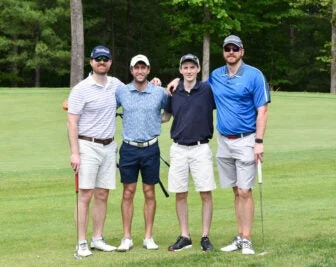
Opportunities abound, including outings such as field trips and picnics, lively athletic programs, as well as the diverse array of cultural opportunities offered by both UVA and Charlottesville.
We are also located a short distance from Washington D.C., Virginia Beach, the Outer Banks of North Carolina, the Appalachian Trail, and many other recreational and travel opportunities.
Learn more about living in Charlottesville, including things to do, housing, schools and more, by clicking here. Watch our recruitment video to hear directly from our current residents about the program's culture and about living in central Virginia.
Community
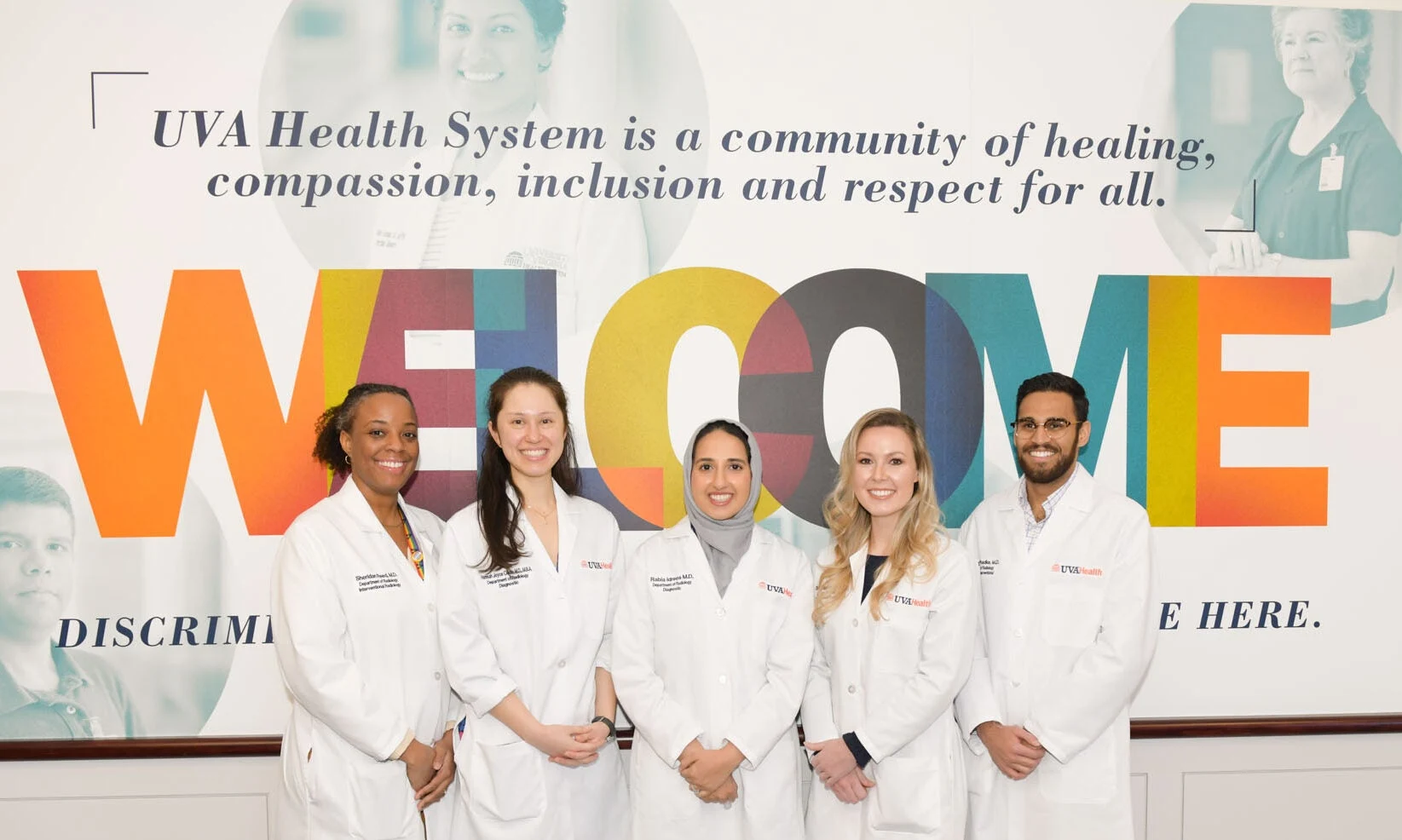
With our large number of residents from all backgrounds and in various stages of life, we take great pride in the strong sense of community amongst our residents. Each year our program attracts a broad group of talented physicians and a culture of mutual respect prevails, regardless of the resident’s year or background.
Wellness Days
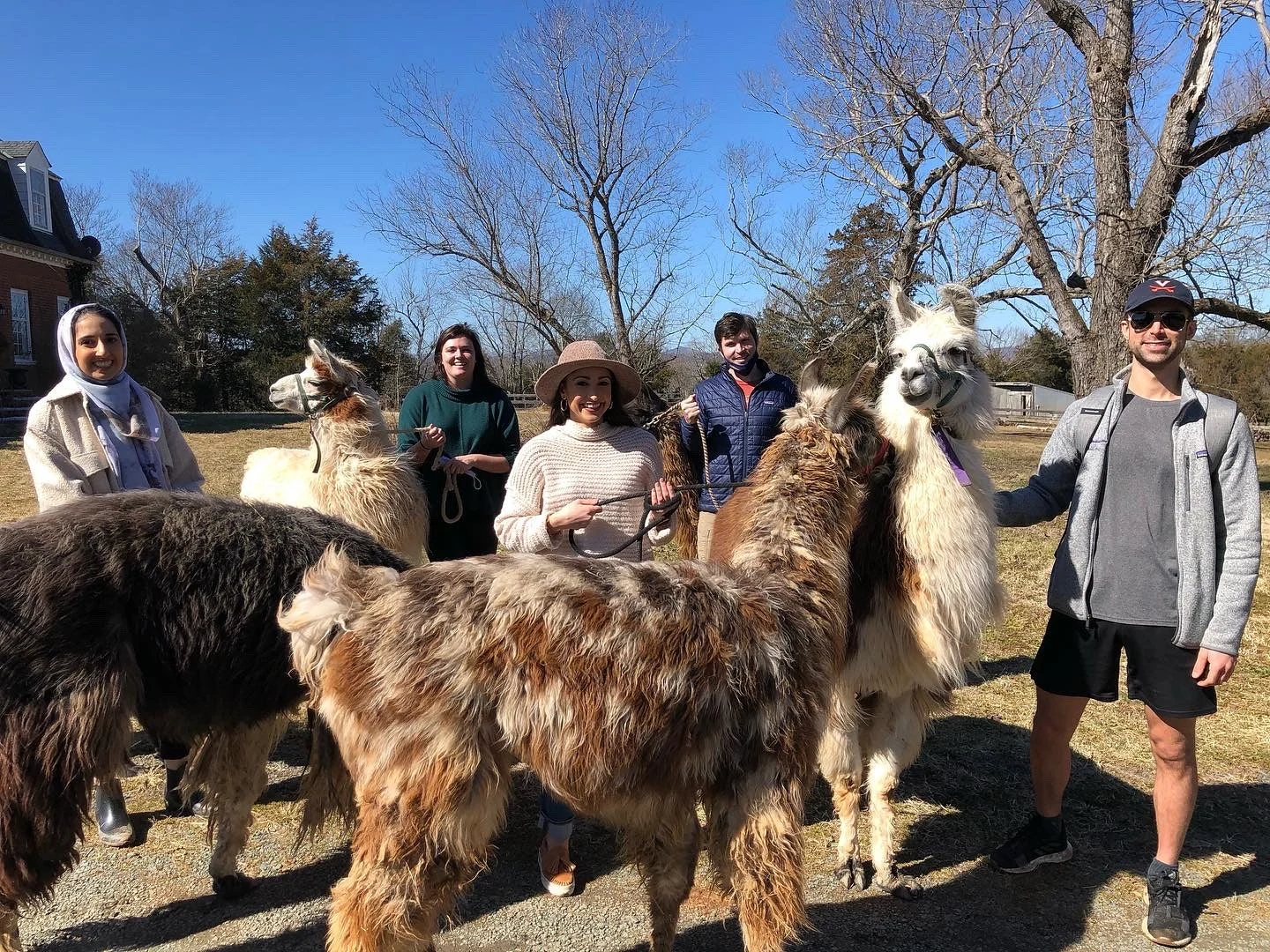
'Wellness Days' are an initiative of the Resident Wellness Program. They create spaces for residents to make connections with others in their class and share activities outside of work, fostering collegiality and increasing engagement.
View Photos from Recent Wellness Days
After Residency
Our Alumni Association, the Keats Society, takes an active role in promoting the interests of the current and former residents. The Society hosts welcoming sessions every year when the matches are announced and when the fourth year residents graduate. A cocktail reception is held yearly at the Radiological Society of North America (RSNA) annual meeting, which is a great opportunity for current and former residents to interact. The Keats Society also holds a spring Homecoming biennially.