Congratulations to Andrew Paquette, Recipient of a NIH F31 – Ruth L. Kirschstein National Research Service Award
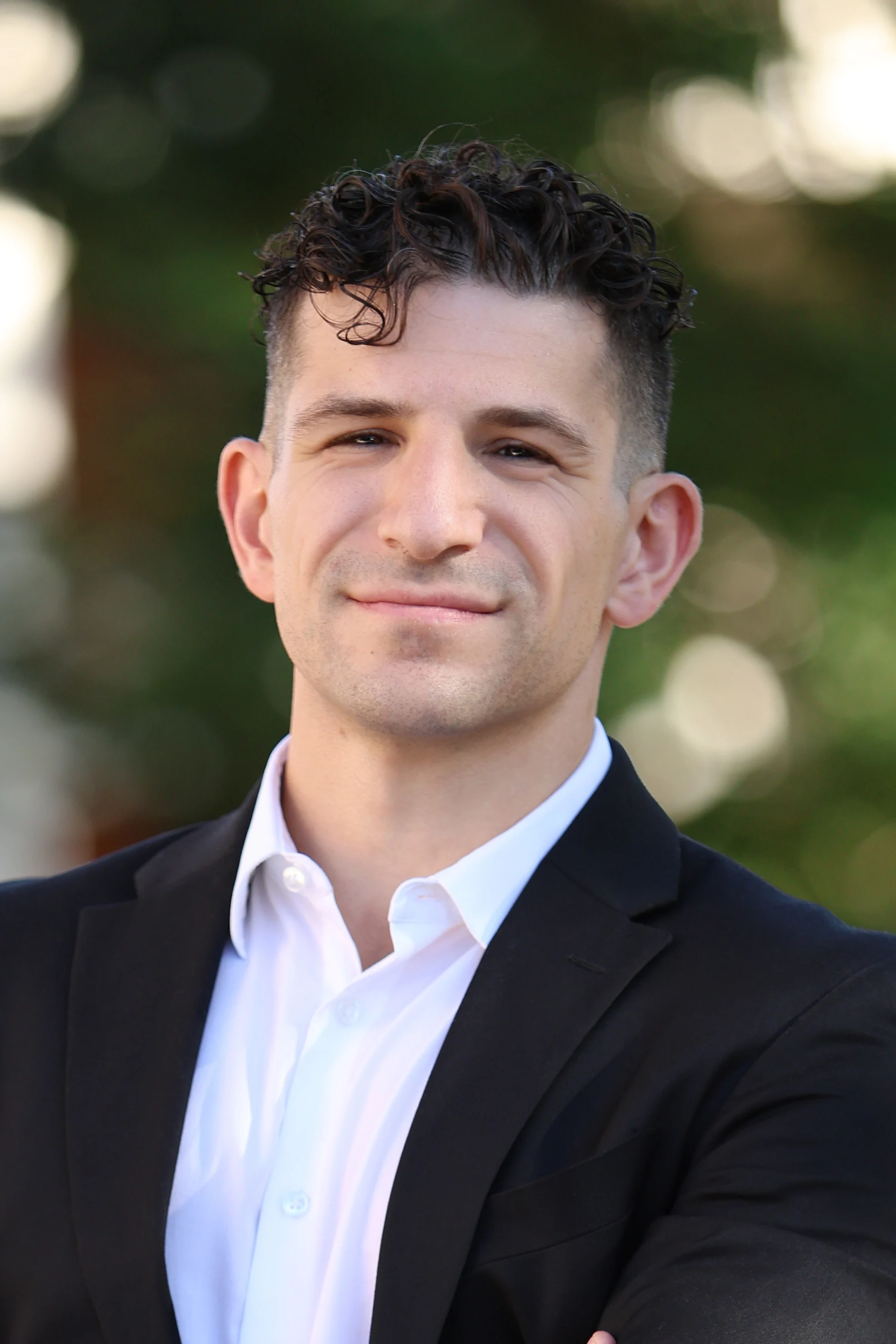
Andrew Paquette was awarded the NIH F31 Ruth L. Kirschstein National Research Service Award from the National Institute on Deafness and Other Communication Disorders that began September 15, 2026. Andrew is a doctoral candidate in Neuroscience in the lab of Jung-Bum Shin. He received his Bachelor of Science degree from Northeastern University in Behavioral Neuroscience.
We asked Andrew to tell us about his research and hopes for the future.
Tell us about your research.
I study stereocilia, the actin-filled projections on inner ear hair cells that convert sound and head movement into the electrical signals behind hearing and balance. Their core is a tightly crosslinked bundle of actin filaments, and the same precision that makes stereocilia so sensitive also makes them fragile. Espin is one of the proteins that crosslinks that bundle, and loss-of-function mutations in the ESPN gene cause deafness and balance problems in both mice and humans. Espin comes in four isoforms that appear at different points in development, yet most of what we know comes from knocking out all of them at once. My project asks what each isoform contributes, focusing on Espin 4, the smallest. A human ESPN variant that disrupts Espins 1–3 but spares Espin 4 causes deafness without vestibular dysfunction, and a mouse line our lab generated that keeps only Espin 4 shows the same split. Using isoform-specific mouse models, I'm combining auditory and vestibular testing with electron microscopy and immunofluorescence to learn why Espin 4 alone seems to be enough for balance but not for hearing. I'm also testing whether Espin 4 helps repair the damage that loud noise leaves in the stereocilia actin core. Knowing which isoforms hair cells actually need, both to build stereocilia and to repair them, could help guide gene therapies for ESPN-related deafness.
What drives or motivates your scientific pursuits?
We each exist in our own world, a vibrant environment our brain continuously constructs, analyzes, navigates and responds to. This philosophy helped rationalize my experiences growing up as a neurodiverse person and instigated my interest in neuroscience. Investigating the intricate mechanisms underpinning the nervous system brings me closer to the worlds other minds create and helps me better understand my own. My drive to elucidate the molecular basis of sensory structures and systems, and how they bring about perception and behavior, leads me to ask my own questions and follow my curiosities. Following them brought me to the Shin lab, where I initiated the project this fellowship now funds.
What are your future goals?
I aim to pursue my dream of running my own lab, using sensory systems to study how individual proteins shape the function of cells, tissues, and whole organisms, with a focus on the proteins that build and maintain the cytoskeleton. Along the way, I want to grow as a mentor and collaborator, and keep sharing the fascinations of neuroscience with future students and people of all backgrounds and interests.