Biophysics & Structural Biology
Biophysics
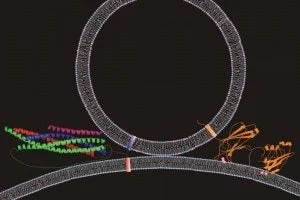
Research in Biophysics at UVA utilizes quantitative approaches to understand the physical and chemical basis of complex biological processes. Biological processes are studied at every level and across many fields, from the theoretical to the experimental.
The Biophysics Graduate Program at the University of Virginia is one of the oldest in the country. We employ a wide range of experimental and computational approaches in a highly interactive and multidisciplinary environment. One of our strengths is in the study of membranes, which are of fundamental importance for biological systems. Membranes compartmentalize the cell, thereby controlling the internal cellular environment. They are sites for energy transduction and signaling. Finally, many regulatory processes take place at membrane surfaces.
Students in biophysics at UVA gain a strong foundation in biophysical approaches and analysis through innovative research and didactic coursework.
Structural Biology
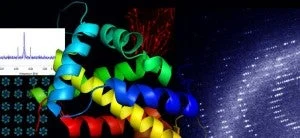
Research in Structural Biology at UVA seeks to acquire a thorough understanding of biological function by gaining a detailed knowledge of the structure of the macromolecules that comprise the machinery of life.Students interested in Structural Biology pursue research designed to determine the 3D structures of proteins and nucleic acids using a variety of methods, including nuclear magnetic resonance spectroscopy, x-ray crystallography, electron microscopy, and electron paramagnetic resonance spectroscopy. Through the use of these different structural methodologies, we are able to gain unique and complementary information about the structure of macromolecules. These structures, in turn, provide important insights into the molecular basis of function and provide a framework for the design of experiments to address biological processes involving the macromolecules under investigation. Structures of medically relevant targets can also play a critical role in accelerating the process of drug design through the use of structure-based lead compound discovery.
Structural biology laboratories at the University of Virginia have established strengths in integral membrane proteins, structural genomics, cell signaling factors, as well as macromolecular assemblies such virus particles and filaments.
Faculty
Genetic approaches, cellular and molecular biology of intracellular pathogen infection
Herve Agaisse, PhD
Genetic approaches, cellular and molecular biology of intracellular pathogen infection

Biophysics of membrane pore formation; research and therapeutic applications of lipid nanoparticles.
Huan Bao
Biophysics of membrane pore formation; research and therapeutic applications of lipid nanoparticles.

Mechanisms of neuromodulation in central neurons
Douglas A. Bayliss
Mechanisms of neuromodulation in central neurons

Computational Biology; Bioinformatics; Precision Medicine; Machine Learning/AI; Quantum Computing
Stefan Bekiranov
Computational Biology; Bioinformatics; Precision Medicine; Machine Learning/AI; Quantum Computing

Drug Development Targeting Transcription Drivers in Cancer; Structure/Function Studies of Transcription Factor Drivers in Cancer
John H. Bushweller
Drug Development Targeting Transcription Drivers in Cancer; Structure/Function Studies of Transcription Factor Drivers in Cancer

Molecular Mechanisms for Membrane Transport and Cell Signaling
David S. Cafiso
Molecular Mechanisms for Membrane Transport and Cell Signaling

Biophysical Chemistry: Membrane protein structure, function, and dynamics
Linda Columbus
Biophysical Chemistry: Membrane protein structure, function, and dynamics

Uncovering the molecular etiology of neurodegenerative diseases
Nikolay V Dokholyan
Uncovering the molecular etiology of neurodegenerative diseases

The design of self-assembling nanomaterials
Kateri H. DuBay
The design of self-assembling nanomaterials

Structure and Function of Macromolecular Complexes Using Electron Microscopy
Edward H. Egelman
Structure and Function of Macromolecular Complexes Using Electron Microscopy

Impact of APOE and lipid metabolism on cell function in Alzheimer's disease.
Sarah Flowers
Impact of APOE and lipid metabolism on cell function in Alzheimer's disease.

Super-resolution fluorescence imaging of bacterial cells
Andreas Gahlmann
Super-resolution fluorescence imaging of bacterial cells

Chromosome organization; Nucleosome structure; Histone marks; Structural cell biology
Lu Gan
Chromosome organization; Nucleosome structure; Histone marks; Structural cell biology

Mechanisms by which cells direct and regulate protein targeting to the ER and mitochondria, and how molecular control of cell dormancy impacts health and disease.
Ahmad Jomaa, PhD
Mechanisms by which cells direct and regulate protein targeting to the ER and mitochondria, and how molecular control of cell dormancy impacts health and disease.

Cellular and molecular mechanisms of morphogenesis
Raymond E. Keller
Cellular and molecular mechanisms of morphogenesis

Architecture and function of biological membranes
Anne Kenworthy
Architecture and function of biological membranes

Bioanalytical Chemistry on Microchips
James P. Landers
Bioanalytical Chemistry on Microchips

Composition, Biophysics and Physiology of Cellular Membranes
Ilya Levental
Composition, Biophysics and Physiology of Cellular Membranes

Tissue Engineering and Regeneration, Computational Systems Biology, Vascular Growth and Remodeling, Stem Cell Therapies
Shayn M. Peirce-Cottler
Tissue Engineering and Regeneration, Computational Systems Biology, Vascular Growth and Remodeling, Stem Cell Therapies

Bioanalytical tools for inflammatory disease
Rebecca Pompano
Bioanalytical tools for inflammatory disease

Delineate the physiological importance and structure-function relationship of ER-associated degradation in humans.
Ling Qi
Delineate the physiological importance and structure-function relationship of ER-associated degradation in humans.

Chromosome segregation and aneuploidy in meiosis and mitosis
Stefanie Redemann
Chromosome segregation and aneuploidy in meiosis and mitosis

Human Immunodeficiency Virus Gene Expression; Human Endogenous Viruses; SARS-CoV-2 Protein Trafficking; Post-transcriptional Gene Regulation
David M. Rekosh
Human Immunodeficiency Virus Gene Expression; Human Endogenous Viruses; SARS-CoV-2 Protein Trafficking; Post-transcriptional Gene Regulation

biophysics, biophysics & structural biology, cardiovascular biology, and physiology
Avril V. Somlyo
biophysics, biophysics & structural biology, cardiovascular biology, and physiology

Identify the calcium signaling abnormalities that lead to vascular dysfunction and blood pressure elevation in cardiovascular disorders
Swapnil Sonkusare
Identify the calcium signaling abnormalities that lead to vascular dysfunction and blood pressure elevation in cardiovascular disorders

Prokaryotic immune systems, bacteriophage virology, programmed cell death, pore-forming proteins, evolution of immunity, cGAS-STING, protein engineering
Uday Tak
Prokaryotic immune systems, bacteriophage virology, programmed cell death, pore-forming proteins, evolution of immunity, cGAS-STING, protein engineering

Biomembrane Structure and Function; Cell Entry of Enveloped Viruses; Neurosecretion by Exocytosis; Structure of Bacterial Pathogen Membrane Proteins; Lipid-Protein Interactions
Lukas K. Tamm
Biomembrane Structure and Function; Cell Entry of Enveloped Viruses; Neurosecretion by Exocytosis; Structure of Bacterial Pathogen Membrane Proteins; Lipid-Protein Interactions

Membrane-transport physiology and biophysics
Ming-Feng Tsai
Membrane-transport physiology and biophysics

Mechanisms of DNA repair in chromatin
Tyler M. Weaver
Mechanisms of DNA repair in chromatin

The formation, function, coordination, and pathology of multinucleated cell types that make up the placenta and musculoskeletal system.
Jarred M Whitlock
The formation, function, coordination, and pathology of multinucleated cell types that make up the placenta and musculoskeletal system.

Molecular Imaging; Cancer Immunology; Vaccines.
Jinghang Xie
Molecular Imaging; Cancer Immunology; Vaccines.

Structural biology, Cryo-EM, Mitochondrial stress, Integrated stress response, De novo protein design, Drug development, Neurodegeneration, Heart disease, Cancer
Jie Yang
Structural biology, Cryo-EM, Mitochondrial stress, Integrated stress response, De novo protein design, Drug development, Neurodegeneration, Heart disease, Cancer

Bioinformatics methodology development; Epigenetics and chromatin biology; Transcriptional regulation; Cancer genomics and epigenomics; Statistical methods for biomedical data integration; Advanced machine learning; Theoretical and computational biophysics
Chongzhi Zang
Bioinformatics methodology development; Epigenetics and chromatin biology; Transcriptional regulation; Cancer genomics and epigenomics; Statistical methods for biomedical data integration; Advanced machine learning; Theoretical and computational biophysics

Transport of biopolymers across biological membranes with a particular interest in polysaccharide and protein translocation.
Jochen Zimmer
Transport of biopolymers across biological membranes with a particular interest in polysaccharide and protein translocation.
