Cancer Biology
About
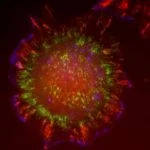
Research in Cancer Biology at UVA focuses on cutting-edge basic, translational, and clinical research in a highly collaborative environment. Our research is significantly enhanced by being part of an NCI-Designated Comprehensive Cancer Center whose mission is in part to discover the fundamental causes of cancer and develop new knowledge into tools for cancer treatment, diagnosis, and prevention. For over 35 years the University of Virginia Cancer Training Program has been preparing students for productive careers in academia, industry and education. Students pursue research under world-renowned faculty in areas such as cancer cell signaling, genetics and epigenetics, chemical and structural biology, immunology and immunotherapy, inflammation and cancer, and interactions between tumor cells and non-transformed stromal components of the tumor microenvironment.
Integration of student training with the UVA NCI-designated Cancer Center provides an exceptional opportunity to prepare students for leadership roles in all aspects of cancer research and to ultimately shape the future of this rapidly expanding area of biomedical research. Students work closely with research teams in women’s oncology, lung cancer, gastrointestinal cancers, hematopoietic malignancies and stem cell research. This research is augmented by state-of-the-art research and clinical facilities that deliver new and innovative therapies to patients.
Faculty
The Ubiquitin System and Human Cancer
Tarek A. Abbas
The Ubiquitin System and Human Cancer

Basic and translational brain tumor research
Roger Abounader
Basic and translational brain tumor research

Engineering cancer-killing T cells to overcome obstacles in solid tumors
Kristin Anderson
Engineering cancer-killing T cells to overcome obstacles in solid tumors

Engineering programmable immunotherapies for solid tumors
Stefanie R. Bailey
Engineering programmable immunotherapies for solid tumors

Cancer metastasis, chemotherapy resistance, genetic and epigenetic regulation
Todd Bauer
Cancer metastasis, chemotherapy resistance, genetic and epigenetic regulation

Computational Biology; Bioinformatics; Precision Medicine; Machine Learning/AI; Quantum Computing
Stefan Bekiranov
Computational Biology; Bioinformatics; Precision Medicine; Machine Learning/AI; Quantum Computing

Genome instability syndromes in cancer and immune deficiencies
Anja Katrin Bielinsky
Genome instability syndromes in cancer and immune deficiencies

Natural Killer Cells, Viral Immunity, Genetic basis of host resistance to viral infection, Tumor immunity, Immune cell regulation
Michael G. Brown
Natural Killer Cells, Viral Immunity, Genetic basis of host resistance to viral infection, Tumor immunity, Immune cell regulation

Pathways to enhance T cell function in tumors.
Timothy N. Bullock, PhD
Pathways to enhance T cell function in tumors.

Drug Development Targeting Transcription Drivers in Cancer; Structure/Function Studies of Transcription Factor Drivers in Cancer
John H. Bushweller
Drug Development Targeting Transcription Drivers in Cancer; Structure/Function Studies of Transcription Factor Drivers in Cancer

1. Molecular and cellular therapy for tissue injury and repair, mainly focusing on heart and lung injury and repair. 2. Cancer biology, mainly focusing on identifying the molecular target that can inhibit the tumorigenesis during aging.
Chuanxi Cai, PhD
1. Molecular and cellular therapy for tissue injury and repair, mainly focusing on heart and lung injury and repair. 2. Cancer biology, mainly focusing on identifying the molecular target that can inhibit the tumorigenesis during aging.

Engineering biomaterials as cellular microenvironments
Steven Caliari
Engineering biomaterials as cellular microenvironments

Role of Arf family GTPases in vesicular transport and cytoskeleton assembly. Cell Biology of bacterial pathogenesis. The innate immune response to bacterial infection.
James E. Casanova
Role of Arf family GTPases in vesicular transport and cytoskeleton assembly. Cell Biology of bacterial pathogenesis. The innate immune response to bacterial infection.

Hematology and Oncology, Cell Biology, Lipid Signaling, Cancer Cell Signaling, and RNA Biology
Charles Edward Chalfant
Hematology and Oncology, Cell Biology, Lipid Signaling, Cancer Cell Signaling, and RNA Biology

Computational genomics and bioinformatics; long-read sequencing; structural variation; genome assembly and pangenomics; human genetic variation and disease genomics
Zechen Chong, Ph.D.
Computational genomics and bioinformatics; long-read sequencing; structural variation; genome assembly and pangenomics; human genetic variation and disease genomics

Immuno-Oncology, T cell therapy, TCR Discovery, Next generation cell therapy
Danielle R. Cook
Immuno-Oncology, T cell therapy, TCR Discovery, Next generation cell therapy

Contribution of the Inflammatory Microenvironment to Tumor Initiation, Progression and Metastasis; Molecular Mechanisms of Cancer Chemoprevention
Janet V. Cross, PhD
Contribution of the Inflammatory Microenvironment to Tumor Initiation, Progression and Metastasis; Molecular Mechanisms of Cancer Chemoprevention

Herpesvirus gene expression & RNA biology
Sarah Dremel
Herpesvirus gene expression & RNA biology

Tumor microenvironment and mechanisms of tumor neovascularization
Andrew Dudley, PhD
Tumor microenvironment and mechanisms of tumor neovascularization

Cytoskeletal architecture, dynamics and roles in cellular physiology and disease; High-resolution live cell and tissue imaging
Seham Ebrahim
Cytoskeletal architecture, dynamics and roles in cellular physiology and disease; High-resolution live cell and tissue imaging

Cancer systems biology, Single-cell quantitative biology, Computational modeling
Mohammad Fallahi-Sichani
Cancer systems biology, Single-cell quantitative biology, Computational modeling

Basement Membrane Structure and Metalloproteinases
Jay W. Fox, PhD
Basement Membrane Structure and Metalloproteinases

Chromosome organization; Nucleosome structure; Histone marks; Structural cell biology
Lu Gan
Chromosome organization; Nucleosome structure; Histone marks; Structural cell biology

Acute Myeloid Leukemia: molecular and cellular biology events which mediate aberrant epigenetic and transcriptional mechanisms during disease establishment and progression
Francine E. Garrett-Bakelman
Acute Myeloid Leukemia: molecular and cellular biology events which mediate aberrant epigenetic and transcriptional mechanisms during disease establishment and progression


Hematopathology and Understanding the Molecular Basis of Hematopoiesis and Leukemogenesis
Adam N. Goldfarb
Hematopathology and Understanding the Molecular Basis of Hematopoiesis and Leukemogenesis

Regeneration and Systemic Responses to Tissue Damage
Adrian J. Halme
Regeneration and Systemic Responses to Tissue Damage

Post Transcriptional Gene Regulation and the Molecular Biology of Human Retroviruses
Marie-Louise Hammarskjold
Post Transcriptional Gene Regulation and the Molecular Biology of Human Retroviruses

Molecular mechanisms controlling insulin signaling and fat synthesis.
Thurl E Harris, PhD
Molecular mechanisms controlling insulin signaling and fat synthesis.

Systems-biology approaches to cancer biology and virology.
Kevin A. Janes
Systems-biology approaches to cancer biology and virology.

The Role of Mitochondrial Fusion and Fission in Tumorigenesis.
David F Kashatus
The Role of Mitochondrial Fusion and Fission in Tumorigenesis.

Advancement in the design of imaging agents; molecular imaging and radiological sciences.
Kimberly Kelly
Advancement in the design of imaging agents; molecular imaging and radiological sciences.

Molecular and metabolic adaptations of cancer cells.
MariCarmen Lafita Navarro
Molecular and metabolic adaptations of cancer cells.


Gene regulation in cancer, RNA processing; Epigenetic modification; Stem cell and development
Hui Li
Gene regulation in cancer, RNA processing; Epigenetic modification; Stem cell and development


Genetic and Epigenetic stability in human cancer
Wenpeng Liu
Genetic and Epigenetic stability in human cancer

Hematologic malignancies; bone marrow disorders; leukemia; large granular lymphocyte (LGL)
Thomas P Loughran, Jr.
Hematologic malignancies; bone marrow disorders; leukemia; large granular lymphocyte (LGL)


Identifying tumor selective drug targets, Understanding the genetic drivers of tumor immune evasion
Timothy D Martin
Identifying tumor selective drug targets, Understanding the genetic drivers of tumor immune evasion


Cell signaling, stem cell biology, molecular and epigenetic mechanisms of blood and breast cancers
Golam Mohi
Cell signaling, stem cell biology, molecular and epigenetic mechanisms of blood and breast cancers

Molecular pathogenesis and genomic analysis of human cancers
Christopher A. Moskaluk
Molecular pathogenesis and genomic analysis of human cancers

Regulation and function of tyrosine phosphorylation in complex networks
Kristen Naegle
Regulation and function of tyrosine phosphorylation in complex networks

Identification of Factors and Mechanisms that Regulate the Stability of Late Stage Atherosclerotic Lesions and the Probability of Thromboembolic Events Including a Heart Attack or Stroke
Gary K. Owens
Identification of Factors and Mechanisms that Regulate the Stability of Late Stage Atherosclerotic Lesions and the Probability of Thromboembolic Events Including a Heart Attack or Stroke

Developmental Genetics, Evolution and Regeneration
David Parichy
Developmental Genetics, Evolution and Regeneration

Mechanisms of tissue/organ homeostasis and tumorigeensis
Kwon Park
Mechanisms of tissue/organ homeostasis and tumorigeensis

Nuclear Transport, Signaling, and Cancer
Bryce M. Paschal
Nuclear Transport, Signaling, and Cancer

Director of Graduate Studies for Microbiology, Immunology and Cancer Biology
Lucy F. Pemberton
Director of Graduate Studies for Microbiology, Immunology and Cancer Biology

Bioanalytical tools for inflammatory disease
Rebecca Pompano
Bioanalytical tools for inflammatory disease

Image Guided Drug and Gene Delivery for Neurodegeneration and Cancer; Focused Ultrasound and Immunotherapy; Arteriogenesis and Angiogenesis
Richard J. Price
Image Guided Drug and Gene Delivery for Neurodegeneration and Cancer; Focused Ultrasound and Immunotherapy; Arteriogenesis and Angiogenesis

Novel therapeutic approaches to brain cancers and to other neurologic diseases
Benjamin W. Purow
Novel therapeutic approaches to brain cancers and to other neurologic diseases

Genomics, Molecular Evolution, Algorithm Design and Analysis
Aakrosh Ratan
Genomics, Molecular Evolution, Algorithm Design and Analysis

Chromosome segregation and aneuploidy in meiosis and mitosis
Stefanie Redemann
Chromosome segregation and aneuploidy in meiosis and mitosis

Human Immunodeficiency Virus Gene Expression; Human Endogenous Viruses; SARS-CoV-2 Protein Trafficking; Post-transcriptional Gene Regulation
David M. Rekosh
Human Immunodeficiency Virus Gene Expression; Human Endogenous Viruses; SARS-CoV-2 Protein Trafficking; Post-transcriptional Gene Regulation

Anti-tumor immunity in brain tumors, Cancer Neuroscience
James Ross
Anti-tumor immunity in brain tumors, Cancer Neuroscience

Influence of commensal microbes on immune homeostasis, anti-tumor immunity, and metastasis
Melanie Rutkowski
Influence of commensal microbes on immune homeostasis, anti-tumor immunity, and metastasis

Regulation of transcription by nuclear hormone receptors, transcriptional control of metabolism and inflammation, small molecule approaches to drug discovery
Ira G. Schulman
Regulation of transcription by nuclear hormone receptors, transcriptional control of metabolism and inflammation, small molecule approaches to drug discovery

computational biology & bioinformatics; high performance computing; epigenomics & chromatin; pediatric cancer; computational regulatory genomics; machine learning
Nathan Sheffield
computational biology & bioinformatics; high performance computing; epigenomics & chromatin; pediatric cancer; computational regulatory genomics; machine learning


Role of Glia in Neurological Illnesses and Cancer
Harald Sontheimer
Role of Glia in Neurological Illnesses and Cancer

Spatial Cell Biology. Neuronal Morphogenesis and Disease. Cancer Migration and Invasion.
Elias T Spiliotis
Spatial Cell Biology. Neuronal Morphogenesis and Disease. Cancer Migration and Invasion.

Mechanisms of chromosome segregation in Mitosis and generation of Chromosomal Instability in tumors
P. Todd Stukenberg
Mechanisms of chromosome segregation in Mitosis and generation of Chromosomal Instability in tumors

Molecular and bioelectric devices; tissue regeneration.
Nathan Swami
Molecular and bioelectric devices; tissue regeneration.


Understanding Protein and RNA regulations of gene expression via chromatin structure in myeloid cell development and diseases
Bon Q Trinh
Understanding Protein and RNA regulations of gene expression via chromatin structure in myeloid cell development and diseases

Genome instability in cancer and repeat expansion diseases
Yuh-Hwa Wang
Genome instability in cancer and repeat expansion diseases

Cancer biology and immunology, Immuno-oncology, Immunometabolism, Genetically-engineered mouse models
Qiwei Wang
Cancer biology and immunology, Immuno-oncology, Immunometabolism, Genetically-engineered mouse models

Mechanisms of DNA repair in chromatin
Tyler M. Weaver
Mechanisms of DNA repair in chromatin

Unraveling the Role of Obesity, Diet, and Lifestyle Factors in Melanoma Progression and Treatment Efficacy
Russell Gardner Witt, MD
Unraveling the Role of Obesity, Diet, and Lifestyle Factors in Melanoma Progression and Treatment Efficacy

Investigating regeneration through genetics and single-cell analysis
Melanie I. Worley
Investigating regeneration through genetics and single-cell analysis

Regulation of Gene Expression, Development and Tumor Progression by TGF beta Signaling
David Wotton
Regulation of Gene Expression, Development and Tumor Progression by TGF beta Signaling

Cardiovascular Development and Cerebrovascular Pathologies
Joshua D Wythe
Cardiovascular Development and Cerebrovascular Pathologies

Molecular Imaging; Cancer Immunology; Vaccines.
Jinghang Xie
Molecular Imaging; Cancer Immunology; Vaccines.

Researching fundamental roles of the epigenome in control of the context-specific transcriptional programs.
Kexin Xu
Researching fundamental roles of the epigenome in control of the context-specific transcriptional programs.

Bioinformatics methodology development; Epigenetics and chromatin biology; Transcriptional regulation; Cancer genomics and epigenomics; Statistical methods for biomedical data integration; Advanced machine learning; Theoretical and computational biophysics
Chongzhi Zang
Bioinformatics methodology development; Epigenetics and chromatin biology; Transcriptional regulation; Cancer genomics and epigenomics; Statistical methods for biomedical data integration; Advanced machine learning; Theoretical and computational biophysics

Pathogenesis of infectious diseases and the development of new therapies and vaccines for infectious diseases and cancers.
Steven L. Zeichner, MD, PhD
Pathogenesis of infectious diseases and the development of new therapies and vaccines for infectious diseases and cancers.

Integrating high-throughput proteomic, chemical, genetic and computational tools for target identification and drug discovery in cancer biology
Tian Zhang
Integrating high-throughput proteomic, chemical, genetic and computational tools for target identification and drug discovery in cancer biology

Transport of biopolymers across biological membranes with a particular interest in polysaccharide and protein translocation.
Jochen Zimmer
Transport of biopolymers across biological membranes with a particular interest in polysaccharide and protein translocation.

