Molecular Biology
About
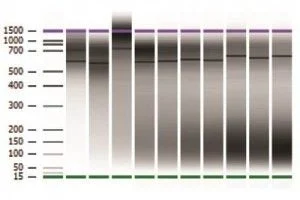
Research in Molecular Biology at UVA employs a variety of techniques to identify and characterize molecular interactions and determine how such interactions are regulated.Regardless of whether a research lab focuses on biological problems at the organismal, cellular, biochemical, biophysical or structural level, the discipline of molecular biology likely plays an integral role. The techniques of molecular biology include manipulation of DNA (including cloning and PCR), gel electrophoresis, immunoprecipitation, and various types of hybridization techniques (including “blots”) to detect DNA, RNA or protein.
At the University of Virginia, graduate students in the majority of our research labs employ molecular biological approaches to address problems that span the full range of modern biological inquiry. We seek graduate students with a passionate interest in exploiting any and all avenues to discover answers to the most important biological problems.
Since molecular biology impacts virtually all aspects of biological research, training in this discipline helps provide our students with the foundation needed for successful careers in academia and industry.
Faculty
The Ubiquitin System and Human Cancer
Tarek A. Abbas
The Ubiquitin System and Human Cancer

Basic and translational brain tumor research
Roger Abounader
Basic and translational brain tumor research

Genetic approaches, cellular and molecular biology of intracellular pathogen infection
Herve Agaisse, PhD
Genetic approaches, cellular and molecular biology of intracellular pathogen infection

Computational Biology; Bioinformatics; Precision Medicine; Machine Learning/AI; Quantum Computing
Stefan Bekiranov
Computational Biology; Bioinformatics; Precision Medicine; Machine Learning/AI; Quantum Computing

Genome instability syndromes in cancer and immune deficiencies
Anja Katrin Bielinsky
Genome instability syndromes in cancer and immune deficiencies

Molecular mechanisms linking innate immune and insulin signaling to control cell growth and metabolism
Michelle Bland
Molecular mechanisms linking innate immune and insulin signaling to control cell growth and metabolism


Natural Killer Cells, Viral Immunity, Genetic basis of host resistance to viral infection, Tumor immunity, Immune cell regulation
Michael G. Brown
Natural Killer Cells, Viral Immunity, Genetic basis of host resistance to viral infection, Tumor immunity, Immune cell regulation

Engineering biomaterials as cellular microenvironments
Steven Caliari
Engineering biomaterials as cellular microenvironments

Hematology and Oncology, Cell Biology, Lipid Signaling, Cancer Cell Signaling, and RNA Biology
Charles Edward Chalfant
Hematology and Oncology, Cell Biology, Lipid Signaling, Cancer Cell Signaling, and RNA Biology

Herpes Simplex Virus Infection of Neurons
Anna Cliffe
Herpes Simplex Virus Infection of Neurons

Epigenetic mechanisms involved in complex human disease
Jessica J. Connelly
Epigenetic mechanisms involved in complex human disease

Contribution of the Inflammatory Microenvironment to Tumor Initiation, Progression and Metastasis; Molecular Mechanisms of Cancer Chemoprevention
Janet V. Cross, PhD
Contribution of the Inflammatory Microenvironment to Tumor Initiation, Progression and Metastasis; Molecular Mechanisms of Cancer Chemoprevention

Host/pathogen Interaction - Chlamydia Infection
Isabelle Derre
Host/pathogen Interaction - Chlamydia Infection

Cell Adhesion and Adhesion-Dependent Cell Signaling in Vertebrate Morphogenesis
Douglas W. DeSimone, PH.D.
Cell Adhesion and Adhesion-Dependent Cell Signaling in Vertebrate Morphogenesis

Structure and Function of Macromolecular Complexes Using Electron Microscopy
Edward H. Egelman
Structure and Function of Macromolecular Complexes Using Electron Microscopy

Cancer systems biology, Single-cell quantitative biology, Computational modeling
Mohammad Fallahi-Sichani
Cancer systems biology, Single-cell quantitative biology, Computational modeling

RNA-protein interactions in antiviral immunity and autoimmune diseases.
Mariano A. Garcia-Blanco, MD, PhD
RNA-protein interactions in antiviral immunity and autoimmune diseases.

Acute Myeloid Leukemia: molecular and cellular biology events which mediate aberrant epigenetic and transcriptional mechanisms during disease establishment and progression
Francine E. Garrett-Bakelman
Acute Myeloid Leukemia: molecular and cellular biology events which mediate aberrant epigenetic and transcriptional mechanisms during disease establishment and progression

Blinding disease age-related macular degeneration, utilizing the tools of immunology, molecular biology, and engineering.
Bradley Gelfand
Blinding disease age-related macular degeneration, utilizing the tools of immunology, molecular biology, and engineering.


Hematopathology and Understanding the Molecular Basis of Hematopoiesis and Leukemogenesis
Adam N. Goldfarb
Hematopathology and Understanding the Molecular Basis of Hematopoiesis and Leukemogenesis

Molecular embryology--gene regulation in cells committed to specific developmental lineages
Robert M. Grainger
Molecular embryology--gene regulation in cells committed to specific developmental lineages

Mechanisms of Genetic and Metabolic Adaptation in the Malaria Parasite, Plasmodium falciparum
Jennifer Guler
Mechanisms of Genetic and Metabolic Adaptation in the Malaria Parasite, Plasmodium falciparum

Circadian entrainment for the treatment of metabolic and neurodegenerative diseases
Ali Deniz D. Güler
Circadian entrainment for the treatment of metabolic and neurodegenerative diseases

Regeneration and Systemic Responses to Tissue Damage
Adrian J. Halme
Regeneration and Systemic Responses to Tissue Damage

Molecular mechanisms controlling insulin signaling and fat synthesis.
Thurl E Harris, PhD
Molecular mechanisms controlling insulin signaling and fat synthesis.

Metabolic and Genetic Regulation of Aging, Redox Biology, DNA Repair, Comparative and Functional Genomics, Stress Resistance, Drug Discovery, Evolutionary Biology, Synthetic and Systems Biology for Evolutionary Engineering, Adaptive Evolution, Mitochondrial Signaling, Neurodegenerative Diseases
Alaattin Kaya
Metabolic and Genetic Regulation of Aging, Redox Biology, DNA Repair, Comparative and Functional Genomics, Stress Resistance, Drug Discovery, Evolutionary Biology, Synthetic and Systems Biology for Evolutionary Engineering, Adaptive Evolution, Mitochondrial Signaling, Neurodegenerative Diseases

Cellular and molecular mechanisms of morphogenesis
Raymond E. Keller
Cellular and molecular mechanisms of morphogenesis

Advancement in the design of imaging agents; molecular imaging and radiological sciences.
Kimberly Kelly
Advancement in the design of imaging agents; molecular imaging and radiological sciences.

Bacterial cell signaling, host-pathogen interactions, intestinal pathogens
Melissa M. Kendall
Bacterial cell signaling, host-pathogen interactions, intestinal pathogens

Regulation of Polarized Morphogenesis
Keith G. Kozminski
Regulation of Polarized Morphogenesis

RNA regulatory networks and RNA binding proteins during cardiovascular development and in cardiovascular disease
Muge N Kuyumcu-Martinez
RNA regulatory networks and RNA binding proteins during cardiovascular development and in cardiovascular disease

Molecular and metabolic adaptations of cancer cells.
MariCarmen Lafita Navarro
Molecular and metabolic adaptations of cancer cells.

Genetic and Epigenetic stability in human cancer
Wenpeng Liu
Genetic and Epigenetic stability in human cancer

Understanding How Immunological Pathways Contribute to Neurodegenerative, Neurodevelopmental, Mental and Behavior Disorders
John R. Lukens
Understanding How Immunological Pathways Contribute to Neurodegenerative, Neurodevelopmental, Mental and Behavior Disorders

Identifying tumor selective drug targets, Understanding the genetic drivers of tumor immune evasion
Timothy D Martin
Identifying tumor selective drug targets, Understanding the genetic drivers of tumor immune evasion


Immune System Regulation of Cardiometabolic Disease
Coleen A. McNamara
Immune System Regulation of Cardiometabolic Disease

Genetic variation, Complex diseases, Coronary artery disease, Genomics, Epigenomics, Regulatory mechanisms, Vascular biology, Pharmacology and Physiology
Clint L. Miller
Genetic variation, Complex diseases, Coronary artery disease, Genomics, Epigenomics, Regulatory mechanisms, Vascular biology, Pharmacology and Physiology

Cell signaling, stem cell biology, molecular and epigenetic mechanisms of blood and breast cancers
Golam Mohi
Cell signaling, stem cell biology, molecular and epigenetic mechanisms of blood and breast cancers

Regulation and function of tyrosine phosphorylation in complex networks
Kristen Naegle
Regulation and function of tyrosine phosphorylation in complex networks


Investigating the cell-biological foundations of development
Ariel Pani
Investigating the cell-biological foundations of development

Mechanisms of tissue/organ homeostasis and tumorigeensis
Kwon Park
Mechanisms of tissue/organ homeostasis and tumorigeensis

Tissue Engineering and Regeneration, Computational Systems Biology, Vascular Growth and Remodeling, Stem Cell Therapies
Shayn M. Peirce-Cottler
Tissue Engineering and Regeneration, Computational Systems Biology, Vascular Growth and Remodeling, Stem Cell Therapies

Director of Graduate Studies for Microbiology, Immunology and Cancer Biology
Lucy F. Pemberton
Director of Graduate Studies for Microbiology, Immunology and Cancer Biology

The Proctor Laboratory integrates systems biology with molecular, cellular, and systems neuroscience into a cutting-edge framework for investigation of multi-scale mechanisms of Alzheimer's disease risk, onset, and progression.
Elizabeth A. Proctor
The Proctor Laboratory integrates systems biology with molecular, cellular, and systems neuroscience into a cutting-edge framework for investigation of multi-scale mechanisms of Alzheimer's disease risk, onset, and progression.


Genomics, Molecular Evolution, Algorithm Design and Analysis
Aakrosh Ratan
Genomics, Molecular Evolution, Algorithm Design and Analysis

Chromosome segregation and aneuploidy in meiosis and mitosis
Stefanie Redemann
Chromosome segregation and aneuploidy in meiosis and mitosis

Human Immunodeficiency Virus Gene Expression; Human Endogenous Viruses; SARS-CoV-2 Protein Trafficking; Post-transcriptional Gene Regulation
David M. Rekosh
Human Immunodeficiency Virus Gene Expression; Human Endogenous Viruses; SARS-CoV-2 Protein Trafficking; Post-transcriptional Gene Regulation

Regulation of transcription by nuclear hormone receptors, transcriptional control of metabolism and inflammation, small molecule approaches to drug discovery
Ira G. Schulman
Regulation of transcription by nuclear hormone receptors, transcriptional control of metabolism and inflammation, small molecule approaches to drug discovery

Molecular and genetic determinants of atherosclerosis and cardiometabolic disorders.
Weibin Shi
Molecular and genetic determinants of atherosclerosis and cardiometabolic disorders.


Transcriptional Silencing and Aging in Yeast
Jeffrey S. Smith
Transcriptional Silencing and Aging in Yeast

Role of Glia in Neurological Illnesses and Cancer
Harald Sontheimer
Role of Glia in Neurological Illnesses and Cancer

Gram-positive pathogenesis; type VII secretion; impact of secreted effectors on host-pathogen interactions and immune responses
Brady Spencer
Gram-positive pathogenesis; type VII secretion; impact of secreted effectors on host-pathogen interactions and immune responses

Mechanisms of chromosome segregation in Mitosis and generation of Chromosomal Instability in tumors
P. Todd Stukenberg
Mechanisms of chromosome segregation in Mitosis and generation of Chromosomal Instability in tumors

Lung injury, repair, and fibrosis; B cell immunology
Jeffrey M Sturek
Lung injury, repair, and fibrosis; B cell immunology

Role of endoplasmic reticulum-associated protein degradation in health and disease
Shengyi Iris Sun
Role of endoplasmic reticulum-associated protein degradation in health and disease

Regulation of cell-surface stability and intracellular trafficking of membrane proteins in epithelial cells
Agnieszka Swiatecka-Urban
Regulation of cell-surface stability and intracellular trafficking of membrane proteins in epithelial cells

Prokaryotic immune systems, bacteriophage virology, programmed cell death, pore-forming proteins, evolution of immunity, cGAS-STING, protein engineering
Uday Tak
Prokaryotic immune systems, bacteriophage virology, programmed cell death, pore-forming proteins, evolution of immunity, cGAS-STING, protein engineering

Biomembrane Structure and Function; Cell Entry of Enveloped Viruses; Neurosecretion by Exocytosis; Structure of Bacterial Pathogen Membrane Proteins; Lipid-Protein Interactions
Lukas K. Tamm
Biomembrane Structure and Function; Cell Entry of Enveloped Viruses; Neurosecretion by Exocytosis; Structure of Bacterial Pathogen Membrane Proteins; Lipid-Protein Interactions


Understanding Protein and RNA regulations of gene expression via chromatin structure in myeloid cell development and diseases
Bon Q Trinh
Understanding Protein and RNA regulations of gene expression via chromatin structure in myeloid cell development and diseases

Vascular Biology, Nanotechnology, Biomaterials, Drug Delivery
Nick Dimitrios Tsihlis, PhD
Vascular Biology, Nanotechnology, Biomaterials, Drug Delivery

Iron metabolism and Immunometabolism in inflammation and autoimmune diseases
Kelsey Voss
Iron metabolism and Immunometabolism in inflammation and autoimmune diseases

Genome instability in cancer and repeat expansion diseases
Yuh-Hwa Wang
Genome instability in cancer and repeat expansion diseases

The immune response to common cold and allergens in health and disease.
Judith A. Woodfolk
The immune response to common cold and allergens in health and disease.

Regulation of Gene Expression, Development and Tumor Progression by TGF beta Signaling
David Wotton
Regulation of Gene Expression, Development and Tumor Progression by TGF beta Signaling

Researching fundamental roles of the epigenome in control of the context-specific transcriptional programs.
Kexin Xu
Researching fundamental roles of the epigenome in control of the context-specific transcriptional programs.

Structural biology, Cryo-EM, Mitochondrial stress, Integrated stress response, De novo protein design, Drug development, Neurodegeneration, Heart disease, Cancer
Jie Yang
Structural biology, Cryo-EM, Mitochondrial stress, Integrated stress response, De novo protein design, Drug development, Neurodegeneration, Heart disease, Cancer

Pathogenesis of infectious diseases and the development of new therapies and vaccines for infectious diseases and cancers.
Steven L. Zeichner, MD, PhD
Pathogenesis of infectious diseases and the development of new therapies and vaccines for infectious diseases and cancers.

Transport of biopolymers across biological membranes with a particular interest in polysaccharide and protein translocation.
Jochen Zimmer
Transport of biopolymers across biological membranes with a particular interest in polysaccharide and protein translocation.
