Global Health Leaders Convene in Tanzania to Advance Research Training and Pandemic Preparedness
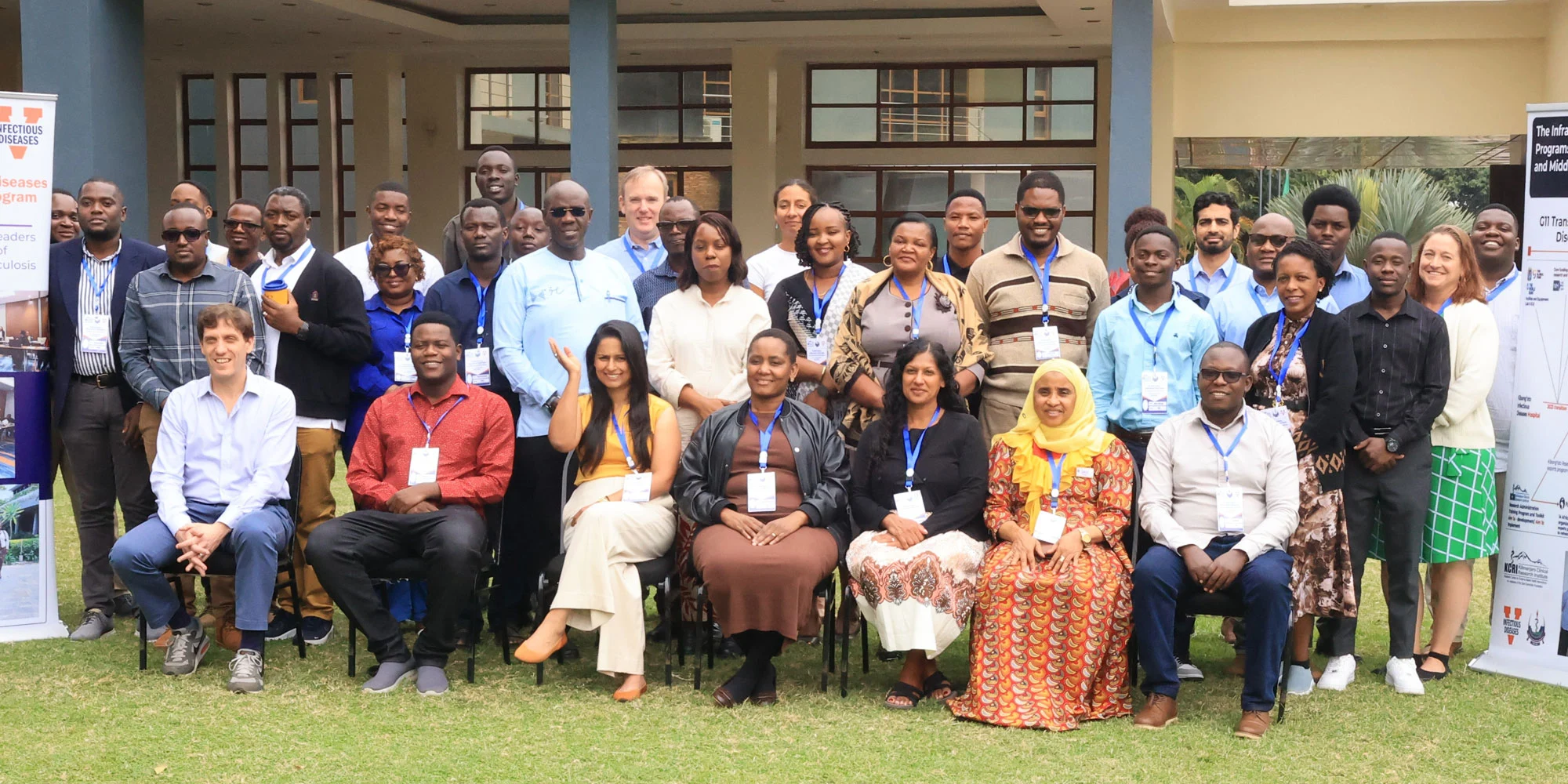
Faculty and staff from the University of Virginia (UVA) and the Tanzania Infectious Diseases Institute (IDI) lead two National Institutes of Health (NIH) Fogarty training grants that support postdoctoral scientists and research administrators in sub-Saharan Africa. In August, program participants and partners convened in Tanzania for an international symposium focused on advancing global health research and pandemic preparedness.
The NIH Fogarty International D43 Global Infectious Diseases Research Training Program and the G11 Global Research Administrators Training Program are led by Scott Heysell, MD, MPH, the Thomas H. Hunter Professor of International Health and director of UVA's Center for Global Health Equity; Stellah Mpagama, MD, PhD, director of Research and Innovation at the Tanzania Infectious Diseases Institute; and Amber Steen, associate director of the Center for Global Health Equity. Their work focuses on preparing postdoctoral scientists and Office of Sponsored Programs staff to lead independent federally and non-governmentally funded research at the intersection of infectious and noncommunicable diseases, including malnutrition.
“We believe pairing the training of dynamic young scientists with that of their administrative staff provides a greater chance of successfully competing for funding in an increasingly competitive landscape,” said Dr. Heysell.
“Additionally, training scientists in Tanzania has afforded numerous opportunities for UVA undergraduates, medical students, and fellows to join their projects.”
In the last year, four postdoctoral trainees have submitted NIH-K43 Career Development Award applications on a broad array of topics, ranging from the gut microbiome to pharmacology and data science.
“The symposium discussions catalyzed the establishment of a Clinical and Translational Research Network on Pandemics,” Dr. Mpagama stated. “This proactive platform will strengthen rapid-response capacity, accelerate evidence into action, and better prepare our health systems for emerging infectious disease threats.”
This year's annual meeting brought together faculty from UVA's Schools of Medicine and Nursing, the Rutgers School of Pharmacy, and the Duke Global Health Institute, as well as stakeholders from the U.S. Centers for Disease Control and Prevention, the U.S. Embassy in Tanzania, the Walter Reed Army Institute of Research, and the Tanzanian People's Defence Force. Discussions focused on emerging infections and pandemic preparedness.
Tania Thomas, MD, MPH, professor of medicine and infectious diseases at UVA and a research mentor, emphasized the value of the symposium's broad participation.
“This year's conference was particularly exciting because it not only brought multidisciplinary scientists together, but also included colleagues from various sectors of health, including global public health, health policy, and academia,” said Dr. Thomas. “Forums such as these help catalyze research that maximizes impact on human health.”