Researchers Earn $5.2M NIH Grant for Alternative Splicing in Islet Autoimmunity and Type 1 Diabetes Progression
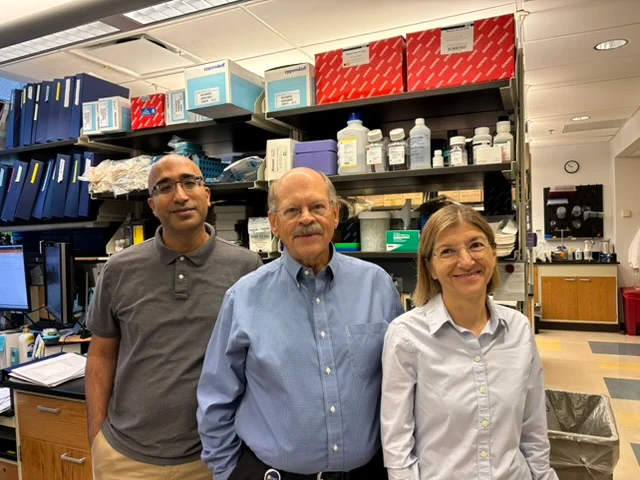
Researchers in the Department of Genome Sciences, Stephen Rich, PhD; Suna Onengut-Gumuscu, PhD; and Aakrosh Ratan, PhD, have been awarded a new $5.2 million multi-PI R01 grant from the NIH National Institute of Diabetes and Digestive and Kidney Diseases (NIDDK). The investigators will leverage longitudinally collected samples and data from The Environmental Determinants of Diabetes in the Young (TEDDY) Study to identify new targets for intervention in the initiation and progression of type 1 diabetes.
Type 1 diabetes is an autoimmune disease that results from an immune-mediated attack on the insulin-producing beta cells of the pancreatic islets. Only 5% to 10% of individuals who develop type 1 diabetes have a positive family history, making the disease difficult to anticipate. Islet autoantibodies can signal developing autoimmunity before clinical diagnosis, but the timing and sequence in which these autoantibodies appear vary among individuals. Better tools are therefore needed to identify those at risk and determine who would benefit from closer monitoring and early immune intervention.
Previous research led by Dr. Rich and colleagues has shown that genetic factors account for approximately half of type 1 diabetes risk and has identified more than 100 sites in the human genome associated with disease susceptibility. Most type 1 diabetes-associated variants lie outside protein-coding regions and are enriched in gene regulatory elements active in immune cells. However, the biological mechanisms that determine whether an individual transitions from genetic susceptibility to islet autoimmunity and clinical type 1 diabetes remain largely unknown.
In this new study, the research team will address this gap by assessing the role of alternative splicing in TEDDY samples. Alternative splicing is a biological process that allows a single gene to produce multiple RNA and protein products, expanding diversity in gene expression and protein function in a tissue-specific manner. Errors in alternative splicing can disrupt gene regulation and have been linked to numerous human diseases.
In prior research, the investigators demonstrated that alternative splicing is associated with type 1 diabetes in several known disease-associated loci and identified 12 genes that encode RNA-binding proteins with potential roles in gene regulation and disease susceptibility. Building on these findings, Dr. Rich and colleagues will use both short- and long-read RNA sequencing, combined with advanced analytical and machine-learning approaches, to identify splicing events associated with the initiation of islet autoimmunity and progression to type 1 diabetes.
The study is expected to improve understanding of the molecular events that precede the clinical onset of type 1 diabetes, enable earlier identification of children at risk for islet autoimmunity and disease progression, improve guidance on the timing of islet autoantibody monitoring, and reveal new opportunities for therapeutic intervention.
Additional collaborators on the project include John Platig, PhD, Department of Genome Sciences; Müge Kuyumcu-Martinez, PhD, Department of Molecular Physiology and Biological Physics; and Tom Hartvigsen, PhD, School of Data Science.