Biochemistry
About
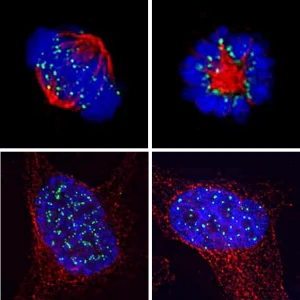
Research in Biochemistry at UVA seeks to identify biologically relevant molecules and study their synthesis, degradation, and role in biological processes.Since molecules interact in complex ways in living organisms, modern biochemical research is a collaborative, interdisciplinary effort. Approaches that are used include molecular biology, genetics, epigenetics, bioinformatics, computational biology, structural biology, and many others. More than 60 faculty from these areas form our robust and dedicated group of mentors in biochemistry.
Research in biochemistry at UVA ranges from computational analysis to clinical applications for cancer and cardiovascular disease. Biochemical studies of interacting proteins, DNA, and sub-cellular structures in normal and disease states provide a wide array of research opportunities. This research, coupled with a broad collection of graduate courses, furnish our students with the skills and background necessary for successful careers in biomedical research and education.
Faculty
The Ubiquitin System and Human Cancer
Tarek A. Abbas
The Ubiquitin System and Human Cancer
Basic and translational brain tumor research
Roger Abounader
Basic and translational brain tumor research
Molecular Biosensors; Spatiotemporal Regulation of Biological Signaling; Protein Engineering for Imaging, Diagnostics, and Therapeutics
Huiwang Ai
Molecular Biosensors; Spatiotemporal Regulation of Biological Signaling; Protein Engineering for Imaging, Diagnostics, and Therapeutics
Biophysics of membrane pore formation; research and therapeutic applications of lipid nanoparticles.
Huan Bao
Biophysics of membrane pore formation; research and therapeutic applications of lipid nanoparticles.
Synthetic biology and protein engineering approaches to develop models of biochemical/biological processes
Bryan W. Berger
Synthetic biology and protein engineering approaches to develop models of biochemical/biological processes
Developing Positron Emission Tomography (PET) and Magnetic Resonance Imaging (MRI) techniques as a tool for basic biomedical research.
Stuart S. Berr
Developing Positron Emission Tomography (PET) and Magnetic Resonance Imaging (MRI) techniques as a tool for basic biomedical research.
Genome instability syndromes in cancer and immune deficiencies
Anja Katrin Bielinsky
Genome instability syndromes in cancer and immune deficiencies
Hematology and Oncology, Cell Biology, Lipid Signaling, Cancer Cell Signaling, and RNA Biology
Charles Edward Chalfant
Hematology and Oncology, Cell Biology, Lipid Signaling, Cancer Cell Signaling, and RNA Biology
Biophysical Chemistry: Membrane protein structure, function, and dynamics
Linda Columbus
Biophysical Chemistry: Membrane protein structure, function, and dynamics
Cytoskeletal architecture, dynamics and roles in cellular physiology and disease; High-resolution live cell and tissue imaging
Seham Ebrahim
Cytoskeletal architecture, dynamics and roles in cellular physiology and disease; High-resolution live cell and tissue imaging
Structure and Function of Macromolecular Complexes Using Electron Microscopy
Edward H. Egelman
Structure and Function of Macromolecular Complexes Using Electron Microscopy
Cancer systems biology, Single-cell quantitative biology, Computational modeling
Mohammad Fallahi-Sichani
Cancer systems biology, Single-cell quantitative biology, Computational modeling
Clinical Chemistry and Toxicology. Medical Automation Research. Neurotransmitters, cell surface receptors and intracellular second messengers.
Robin A. Felder
Clinical Chemistry and Toxicology. Medical Automation Research. Neurotransmitters, cell surface receptors and intracellular second messengers.
Impact of APOE and lipid metabolism on cell function in Alzheimer's disease.
Sarah Flowers
Impact of APOE and lipid metabolism on cell function in Alzheimer's disease.
Basement Membrane Structure and Metalloproteinases
Jay W. Fox, PhD
Basement Membrane Structure and Metalloproteinases
Molecular basis of ciliopathies; Signaling mechanisms of cilia-associated kinases
Zheng "John" Fu
Molecular basis of ciliopathies; Signaling mechanisms of cilia-associated kinases
RNA-protein interactions in antiviral immunity and autoimmune diseases.
Mariano A. Garcia-Blanco
RNA-protein interactions in antiviral immunity and autoimmune diseases.
Exploring new therapeutics avenues to treat Multiple Sclerosis.
Alban Gaultier
Exploring new therapeutics avenues to treat Multiple Sclerosis.
Hematopathology and Understanding the Molecular Basis of Hematopoiesis and Leukemogenesis
Adam N. Goldfarb
Hematopathology and Understanding the Molecular Basis of Hematopoiesis and Leukemogenesis
Molecular Mechanics of Muscle Contraction and Cell Movement
William H. Guilford
Molecular Mechanics of Muscle Contraction and Cell Movement
Molecular mechanisms controlling insulin signaling and fat synthesis.
Thurl E Harris, PhD
Molecular mechanisms controlling insulin signaling and fat synthesis.
Mechanisms by which cells direct and regulate protein targeting to the ER and mitochondria, and how molecular control of cell dormancy impacts health and disease.
Ahmad Jomaa, PhD
Mechanisms by which cells direct and regulate protein targeting to the ER and mitochondria, and how molecular control of cell dormancy impacts health and disease.
Metabolic and Genetic Regulation of Aging, Redox Biology, DNA Repair, Comparative and Functional Genomics, Stress Resistance, Drug Discovery, Evolutionary Biology, Synthetic and Systems Biology for Evolutionary Engineering, Adaptive Evolution, Mitochondrial Signaling, Neurodegenerative Diseases
Alaattin Kaya
Metabolic and Genetic Regulation of Aging, Redox Biology, DNA Repair, Comparative and Functional Genomics, Stress Resistance, Drug Discovery, Evolutionary Biology, Synthetic and Systems Biology for Evolutionary Engineering, Adaptive Evolution, Mitochondrial Signaling, Neurodegenerative Diseases
Bacterial cell signaling, host-pathogen interactions, intestinal pathogens
Melissa M. Kendall
Bacterial cell signaling, host-pathogen interactions, intestinal pathogens
Molecular and metabolic adaptations of cancer cells.
MariCarmen Lafita Navarro
Molecular and metabolic adaptations of cancer cells.
Composition, Biophysics and Physiology of Cellular Membranes
Ilya Levental
Composition, Biophysics and Physiology of Cellular Membranes
Genetic and Epigenetic stability in human cancer
Wenpeng Liu
Genetic and Epigenetic stability in human cancer
Wnt/PCP signaling in inner ear development Mouse models for human deafness Wnt/PCP signaling in neural tube closure
Xiaowei Lu
Wnt/PCP signaling in inner ear development Mouse models for human deafness Wnt/PCP signaling in neural tube closure
Chemical biology of sphingosine 1-phosphate
Kevin R. Lynch
Chemical biology of sphingosine 1-phosphate
Statistical Genetics, Genetic Epidemiology, Biostatistics, Network analysis
Ani Manichaikul
Statistical Genetics, Genetic Epidemiology, Biostatistics, Network analysis
Genetic variation, Complex diseases, Coronary artery disease, Genomics, Epigenomics, Regulatory mechanisms, Vascular biology, Pharmacology and Physiology
Clint L. Miller
Genetic variation, Complex diseases, Coronary artery disease, Genomics, Epigenomics, Regulatory mechanisms, Vascular biology, Pharmacology and Physiology
Cell signaling, stem cell biology, molecular and epigenetic mechanisms of blood and breast cancers
Golam Mohi
Cell signaling, stem cell biology, molecular and epigenetic mechanisms of blood and breast cancers
Regulation and function of tyrosine phosphorylation in complex networks
Kristen Naegle
Regulation and function of tyrosine phosphorylation in complex networks
Systems biology, infectious disease, cancer, toxicology, metabolic engineering
Jason Papin
Systems biology, infectious disease, cancer, toxicology, metabolic engineering
Mechanisms of tissue/organ homeostasis and tumorigeensis
Kwon Park
Mechanisms of tissue/organ homeostasis and tumorigeensis
Nuclear Transport, Signaling, and Cancer
Bryce M. Paschal
Nuclear Transport, Signaling, and Cancer
Director of Graduate Studies for Microbiology, Immunology and Cancer Biology
Lucy F. Pemberton
Director of Graduate Studies for Microbiology, Immunology and Cancer Biology
Human Immunodeficiency Virus Gene Expression; Human Endogenous Viruses; SARS-CoV-2 Protein Trafficking; Post-transcriptional Gene Regulation
David M. Rekosh
Human Immunodeficiency Virus Gene Expression; Human Endogenous Viruses; SARS-CoV-2 Protein Trafficking; Post-transcriptional Gene Regulation
Regulation of transcription by nuclear hormone receptors, transcriptional control of metabolism and inflammation, small molecule approaches to drug discovery
Ira G. Schulman
Regulation of transcription by nuclear hormone receptors, transcriptional control of metabolism and inflammation, small molecule approaches to drug discovery
Transcriptional Silencing and Aging in Yeast
Jeffrey S. Smith
Transcriptional Silencing and Aging in Yeast
Gram-positive pathogenesis; type VII secretion; impact of secreted effectors on host-pathogen interactions and immune responses
Brady Spencer
Gram-positive pathogenesis; type VII secretion; impact of secreted effectors on host-pathogen interactions and immune responses
Spatial Cell Biology. Neuronal Morphogenesis and Disease. Cancer Migration and Invasion.
Elias T Spiliotis
Spatial Cell Biology. Neuronal Morphogenesis and Disease. Cancer Migration and Invasion.
Mechanisms of chromosome segregation in Mitosis and generation of Chromosomal Instability in tumors
P. Todd Stukenberg
Mechanisms of chromosome segregation in Mitosis and generation of Chromosomal Instability in tumors
Prokaryotic immune systems, bacteriophage virology, programmed cell death, pore-forming proteins, evolution of immunity, cGAS-STING, protein engineering
Uday Tak
Prokaryotic immune systems, bacteriophage virology, programmed cell death, pore-forming proteins, evolution of immunity, cGAS-STING, protein engineering
Biomembrane Structure and Function; Cell Entry of Enveloped Viruses; Neurosecretion by Exocytosis; Structure of Bacterial Pathogen Membrane Proteins; Lipid-Protein Interactions
Lukas K. Tamm
Biomembrane Structure and Function; Cell Entry of Enveloped Viruses; Neurosecretion by Exocytosis; Structure of Bacterial Pathogen Membrane Proteins; Lipid-Protein Interactions
Understanding Protein and RNA regulations of gene expression via chromatin structure in myeloid cell development and diseases
Bon Q Trinh
Understanding Protein and RNA regulations of gene expression via chromatin structure in myeloid cell development and diseases
Membrane-transport physiology and biophysics
Ming-Feng Tsai
Membrane-transport physiology and biophysics
Vascular Biology, Nanotechnology, Biomaterials, Drug Delivery
Nick Dimitrios Tsihlis
Vascular Biology, Nanotechnology, Biomaterials, Drug Delivery
Clonal hematopoiesis: A new mechanism of cardiovascular disease
Kenneth Walsh
Clonal hematopoiesis: A new mechanism of cardiovascular disease
Genome instability in cancer and repeat expansion diseases
Yuh-Hwa Wang
Genome instability in cancer and repeat expansion diseases
Mechanisms of DNA repair in chromatin
Tyler M. Weaver
Mechanisms of DNA repair in chromatin
The formation, function, coordination, and pathology of multinucleated cell types that make up the placenta and musculoskeletal system.
Jarred M Whitlock
The formation, function, coordination, and pathology of multinucleated cell types that make up the placenta and musculoskeletal system.
Regulation of miRNA Processing and Function During Oogenesis and Embryogenesis
W. Michael Wormington
Regulation of miRNA Processing and Function During Oogenesis and Embryogenesis
Regulation of Gene Expression, Development and Tumor Progression by TGF beta Signaling
David Wotton
Regulation of Gene Expression, Development and Tumor Progression by TGF beta Signaling
Molecular Imaging; Cancer Immunology; Vaccines.
Jinghang Xie
Molecular Imaging; Cancer Immunology; Vaccines.
Structural biology, Cryo-EM, Mitochondrial stress, Integrated stress response, De novo protein design, Drug development, Neurodegeneration, Heart disease, Cancer
Jie Yang
Structural biology, Cryo-EM, Mitochondrial stress, Integrated stress response, De novo protein design, Drug development, Neurodegeneration, Heart disease, Cancer
Mechanisms of Huntington's Disease Pathogenesis
Scott O. Zeitlin
Mechanisms of Huntington's Disease Pathogenesis
Integrating high-throughput proteomic, chemical, genetic and computational tools for target identification and drug discovery in cancer biology
Tian Zhang
Integrating high-throughput proteomic, chemical, genetic and computational tools for target identification and drug discovery in cancer biology
Genetics, Functional Genomics, Epigenetics, Lung repair/regeneration, Metabolic regulation, Alveolar stem cells, Chromatin interaction, Innate immune response, Live-cell imaging
Anny Xiaobo Zhou
Genetics, Functional Genomics, Epigenetics, Lung repair/regeneration, Metabolic regulation, Alveolar stem cells, Chromatin interaction, Innate immune response, Live-cell imaging
Transport of biopolymers across biological membranes with a particular interest in polysaccharide and protein translocation.
Jochen Zimmer
Transport of biopolymers across biological membranes with a particular interest in polysaccharide and protein translocation.