Bioinformatics & Genomics
About
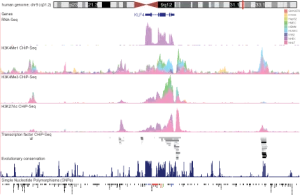
Research in Bioinformatics and Genomics at UVA uses quantitative methods to describe the behavior of genes, genomes, and biological systems.At the intersection of experimental and computational biology, genomics research involves interpretation and integration of large-scale, genome-wide datasets.
These approaches are being applied to diverse topics in biology and medicine including cancer genomics, human and model organism genetics, epigenetics, and evolution. Active areas of research at the University of Virginia include whole-genome sequencing, cancer genome evolution, disease gene mapping, personalized medicine, gene expression profiling, epigenome mapping, high-throughput functional genetics, genome annotation, protein evolution, and pathway reconstruction.
Genomics and bioinformatics research often requires the development of new techniques, including both experimental protocols and data analysis algorithms, to enable a deeper understanding of complex biological systems. In this respect, the field is entering a new and exciting era; rapidly improving “next-generation” DNA sequencing technologies now allow for the routine sequencing of entire genomes and transcriptomes, or of virtually any targeted set of DNA or RNA molecules.
The exponential explosion of genomic data fueled by these technologies presents an unprecedented opportunity to elucidate the molecular underpinnings of natural variation and human disease, but the sheer abundance and complexity of these data also pose significant and unsolved bioinformatic challenges. The scope of these opportunities and challenges promises to revolutionize biology and medicine.
Faculty
Basic and translational brain tumor research
Roger Abounader
Basic and translational brain tumor research
Computational Biology; Bioinformatics; Precision Medicine; Machine Learning/AI; Quantum Computing
Stefan Bekiranov
Computational Biology; Bioinformatics; Precision Medicine; Machine Learning/AI; Quantum Computing
Genome instability syndromes in cancer and immune deficiencies
Anja Katrin Bielinsky
Genome instability syndromes in cancer and immune deficiencies
The Neurobiology of Energy Balance
John Nelson Campbell
The Neurobiology of Energy Balance
Computational genomics and bioinformatics; long-read sequencing; structural variation; genome assembly and pangenomics; human genetic variation and disease genomics
Zechen Chong, Ph.D.
Computational genomics and bioinformatics; long-read sequencing; structural variation; genome assembly and pangenomics; human genetic variation and disease genomics
Computational Biology; Machine Learning; Statistical Modeling; Single Cell Biology; Spatial Biology; Liquid Biopsy
Tinyi Chu, PhD
Computational Biology; Machine Learning; Statistical Modeling; Single Cell Biology; Spatial Biology; Liquid Biopsy
The maternal and infant microbiome in childhood growth and immunity
Carrie A. Cowardin
The maternal and infant microbiome in childhood growth and immunity
Systems Immunology, Cancer Systems Biology, , Neonatal and Maternal Immunology
Sepideh Dolatshahi
Systems Immunology, Cancer Systems Biology, , Neonatal and Maternal Immunology
Herpesvirus gene expression & RNA biology
Sarah Dremel
Herpesvirus gene expression & RNA biology
Tumor microenvironment and mechanisms of tumor neovascularization
Andrew Dudley, PhD
Tumor microenvironment and mechanisms of tumor neovascularization
Systems Genetics of Skeletal Development and Maintenance
Charles R. Farber
Systems Genetics of Skeletal Development and Maintenance
Acute Myeloid Leukemia: molecular and cellular biology events which mediate aberrant epigenetic and transcriptional mechanisms during disease establishment and progression
Francine E. Garrett-Bakelman
Acute Myeloid Leukemia: molecular and cellular biology events which mediate aberrant epigenetic and transcriptional mechanisms during disease establishment and progression
Molecular embryology--gene regulation in cells committed to specific developmental lineages
Robert M. Grainger
Molecular embryology--gene regulation in cells committed to specific developmental lineages
Mechanisms of Genetic and Metabolic Adaptation in the Malaria Parasite, Plasmodium falciparum
Jennifer Guler
Mechanisms of Genetic and Metabolic Adaptation in the Malaria Parasite, Plasmodium falciparum
Understanding Cellular and Molecular Mechanisms Leading to Blood Vessel Formation
Karen Kemper Hirschi
Understanding Cellular and Molecular Mechanisms Leading to Blood Vessel Formation
Neuronal circuits underlying infant behaviors, including sleep and social behavior
Harris Kaplan
Neuronal circuits underlying infant behaviors, including sleep and social behavior
Gene regulation in cancer, RNA processing; Epigenetic modification; Stem cell and development
Hui Li
Gene regulation in cancer, RNA processing; Epigenetic modification; Stem cell and development
Hematologic malignancies; bone marrow disorders; leukemia; large granular lymphocyte (LGL)
Thomas P Loughran, Jr.
Hematologic malignancies; bone marrow disorders; leukemia; large granular lymphocyte (LGL)
Statistical Genetics, Genetic Epidemiology, Biostatistics, Network analysis
Ani Manichaikul
Statistical Genetics, Genetic Epidemiology, Biostatistics, Network analysis
Immune System Regulation of Cardiometabolic Disease
Coleen A. McNamara
Immune System Regulation of Cardiometabolic Disease
Genetic variation, Complex diseases, Coronary artery disease, Genomics, Epigenomics, Regulatory mechanisms, Vascular biology, Pharmacology and Physiology
Clint L. Miller
Genetic variation, Complex diseases, Coronary artery disease, Genomics, Epigenomics, Regulatory mechanisms, Vascular biology, Pharmacology and Physiology
Regulation and function of tyrosine phosphorylation in complex networks
Kristen Naegle
Regulation and function of tyrosine phosphorylation in complex networks
Identification of Factors and Mechanisms that Regulate the Stability of Late Stage Atherosclerotic Lesions and the Probability of Thromboembolic Events Including a Heart Attack or Stroke
Gary K. Owens
Identification of Factors and Mechanisms that Regulate the Stability of Late Stage Atherosclerotic Lesions and the Probability of Thromboembolic Events Including a Heart Attack or Stroke
Systems biology, infectious disease, cancer, toxicology, metabolic engineering
Jason Papin
Systems biology, infectious disease, cancer, toxicology, metabolic engineering
Developmental Genetics, Evolution and Regeneration
David Parichy
Developmental Genetics, Evolution and Regeneration
Gene regulatory networks, Systems genetics, Multi-omic data integration, Network science
John Platig, PhD
Gene regulatory networks, Systems genetics, Multi-omic data integration, Network science
Genomics, Molecular Evolution, Algorithm Design and Analysis
Aakrosh Ratan
Genomics, Molecular Evolution, Algorithm Design and Analysis
Human Immunodeficiency Virus Gene Expression; Human Endogenous Viruses; SARS-CoV-2 Protein Trafficking; Post-transcriptional Gene Regulation
David M. Rekosh
Human Immunodeficiency Virus Gene Expression; Human Endogenous Viruses; SARS-CoV-2 Protein Trafficking; Post-transcriptional Gene Regulation
Genetic basis of common human disease, including type 1 diabetes, diabetic complications, ischemic stroke, atherosclerosis
Stephen S. Rich
Genetic basis of common human disease, including type 1 diabetes, diabetic complications, ischemic stroke, atherosclerosis
Roles of complex signaling networks involved in the regulation of cardiovascular function and disease
Jeffrey J. Saucerman
Roles of complex signaling networks involved in the regulation of cardiovascular function and disease
computational biology & bioinformatics; high performance computing; epigenomics & chromatin; pediatric cancer; computational regulatory genomics; machine learning
Nathan Sheffield
computational biology & bioinformatics; high performance computing; epigenomics & chromatin; pediatric cancer; computational regulatory genomics; machine learning
Proteoform Systems Biology: proteogenomic approaches to uncover the role of proteomic variation in human disease
Gloria M. Sheynkman
Proteoform Systems Biology: proteogenomic approaches to uncover the role of proteomic variation in human disease
Mechanisms of chromosome segregation in Mitosis and generation of Chromosomal Instability in tumors
P. Todd Stukenberg
Mechanisms of chromosome segregation in Mitosis and generation of Chromosomal Instability in tumors
Viral immunology, Cancer immunology, Aging, Mucosal Immunology
Jie Sun
Viral immunology, Cancer immunology, Aging, Mucosal Immunology
Regulation of cell-surface stability and intracellular trafficking of membrane proteins in epithelial cells
Agnieszka Swiatecka-Urban
Regulation of cell-surface stability and intracellular trafficking of membrane proteins in epithelial cells
Understanding Protein and RNA regulations of gene expression via chromatin structure in myeloid cell development and diseases
Bon Q Trinh
Understanding Protein and RNA regulations of gene expression via chromatin structure in myeloid cell development and diseases
Genome instability in cancer and repeat expansion diseases
Yuh-Hwa Wang
Genome instability in cancer and repeat expansion diseases
The immune response to common cold and allergens in health and disease.
Judith A. Woodfolk
The immune response to common cold and allergens in health and disease.
Investigating regeneration through genetics and single-cell analysis
Melanie I. Worley
Investigating regeneration through genetics and single-cell analysis
Cardiovascular Development and Cerebrovascular Pathologies
Joshua D Wythe
Cardiovascular Development and Cerebrovascular Pathologies
Bioinformatics methodology development; Epigenetics and chromatin biology; Transcriptional regulation; Cancer genomics and epigenomics; Statistical methods for biomedical data integration; Advanced machine learning; Theoretical and computational biophysics
Chongzhi Zang
Bioinformatics methodology development; Epigenetics and chromatin biology; Transcriptional regulation; Cancer genomics and epigenomics; Statistical methods for biomedical data integration; Advanced machine learning; Theoretical and computational biophysics
Integrating high-throughput proteomic, chemical, genetic and computational tools for target identification and drug discovery in cancer biology
Tian Zhang
Integrating high-throughput proteomic, chemical, genetic and computational tools for target identification and drug discovery in cancer biology