Biotechnology
About
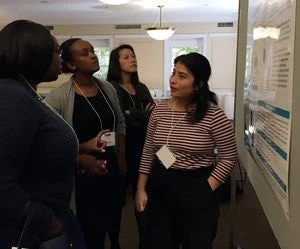
Research in Biotechnology at UVA brings together researchers from all biomedical, engineering, and chemical sciences at UVA to promote state-of-the-art collaborative science. From this innovative science comes conceptual breakthroughs and new products.In 2000, we established a Biotechnology Training Program (BTP) at UVA with the goal of providing fertile ground for the development of future leaders in science and technology. It is one of only 19 BTPs nationwide. Our graduates are scientific leaders at major biotechnology companies, federal agencies, and foundations, and lead independent research labs at universities, or are postdoctoral scientists at institutions nationwide.
The BTP offers many enhancements. The 2 – 3 month company externship training is transformative. Some students alter career plans towards academia or industrial research. Others affirm prior career directions or receive unexpected offers of employment. All make important contributions, some publish articles, and invariably the collaboration enhances thesis projects. Venues are worldwide, from Boston to San Francisco to Australia, England, Holland, Finland, Germany, Spain and Sweden.
We also offer company tours – including Merck, Pfizer, BD; panel discussions with industrial leaders – including BTP alumni; as well as seminars and biannual symposia that gather recognized innovators under the umbrella of a broad scientific theme.
Our outstanding mentors from across the sciences at UVA are award-winning leaders in their fields, with success in nurturing the best from our students. Many hold patents, and several have started companies. This is an exciting time for our students to be at the frontlines of science and technology.
Faculty
Neurobiology of the cardiovascular and respiratory system, Central mechanisms linking cardiorespiratory function with affective state and emotion
Stephen B. Abbott
Neurobiology of the cardiovascular and respiratory system, Central mechanisms linking cardiorespiratory function with affective state and emotion
Molecular Biosensors; Spatiotemporal Regulation of Biological Signaling; Protein Engineering for Imaging, Diagnostics, and Therapeutics
Huiwang Ai
Molecular Biosensors; Spatiotemporal Regulation of Biological Signaling; Protein Engineering for Imaging, Diagnostics, and Therapeutics
Biophysics of membrane pore formation; research and therapeutic applications of lipid nanoparticles.
Huan Bao
Biophysics of membrane pore formation; research and therapeutic applications of lipid nanoparticles.
Engineering biomaterials as cellular microenvironments
Steven Caliari
Engineering biomaterials as cellular microenvironments
Computational Biology; Machine Learning; Statistical Modeling; Single Cell Biology; Spatial Biology; Liquid Biopsy
Tinyi Chu, PhD
Computational Biology; Machine Learning; Statistical Modeling; Single Cell Biology; Spatial Biology; Liquid Biopsy
Immuno-Oncology, T cell therapy, TCR Discovery, Next generation cell therapy
Danielle R. Cook
Immuno-Oncology, T cell therapy, TCR Discovery, Next generation cell therapy
Uncovering the molecular etiology of neurodegenerative diseases
Nikolay V Dokholyan
Uncovering the molecular etiology of neurodegenerative diseases
Systems Genetics of Skeletal Development and Maintenance
Charles R. Farber
Systems Genetics of Skeletal Development and Maintenance
Clinical Chemistry and Toxicology. Medical Automation Research. Neurotransmitters, cell surface receptors and intracellular second messengers.
Robin A. Felder
Clinical Chemistry and Toxicology. Medical Automation Research. Neurotransmitters, cell surface receptors and intracellular second messengers.
Bacterial attachment and biofilms, microbial transport in porous media
Roseanne M. Ford
Bacterial attachment and biofilms, microbial transport in porous media
Basement Membrane Structure and Metalloproteinases
Jay W. Fox, PhD
Basement Membrane Structure and Metalloproteinases
Blinding disease age-related macular degeneration, utilizing the tools of immunology, molecular biology, and engineering.
Bradley Gelfand
Blinding disease age-related macular degeneration, utilizing the tools of immunology, molecular biology, and engineering.
Circadian entrainment for the treatment of metabolic and neurodegenerative diseases
Ali Deniz D. Güler
Circadian entrainment for the treatment of metabolic and neurodegenerative diseases
Post Transcriptional Gene Regulation and the Molecular Biology of Human Retroviruses
Marie-Louise Hammarskjold
Post Transcriptional Gene Regulation and the Molecular Biology of Human Retroviruses
Molecular mechanisms controlling insulin signaling and fat synthesis.
Thurl E Harris, PhD
Molecular mechanisms controlling insulin signaling and fat synthesis.
Translating our discoveries in the microcirculation to tangible benefits in patients.
Brant Isakson
Translating our discoveries in the microcirculation to tangible benefits in patients.
Advancement in the design of imaging agents; molecular imaging and radiological sciences.
Kimberly Kelly
Advancement in the design of imaging agents; molecular imaging and radiological sciences.
Regulation of Polarized Morphogenesis
Keith G. Kozminski
Regulation of Polarized Morphogenesis
Neural tissue engineering, biomaterials, drug delivery, redox regulation of stem cell fate, engineering cell-interactive microenvironments
Kyle Lampe
Neural tissue engineering, biomaterials, drug delivery, redox regulation of stem cell fate, engineering cell-interactive microenvironments
Bioanalytical Chemistry on Microchips
James P. Landers
Bioanalytical Chemistry on Microchips
Restoration of Homeostasis in Disease
Gordon W. Laurie
Restoration of Homeostasis in Disease
Chemical biology of sphingosine 1-phosphate
Kevin R. Lynch
Chemical biology of sphingosine 1-phosphate
Immune System Regulation of Cardiometabolic Disease
Coleen A. McNamara
Immune System Regulation of Cardiometabolic Disease
Molecular pathogenesis and genomic analysis of human cancers
Christopher A. Moskaluk
Molecular pathogenesis and genomic analysis of human cancers
Regulation and function of tyrosine phosphorylation in complex networks
Kristen Naegle
Regulation and function of tyrosine phosphorylation in complex networks
Understanding the neural code underlying motivated behaviors like feeding, drinking, and social interaction, with a focus on how malfunction in associated brain areas are involved in diseases like addiction and eating disorders
Edward Horng-An Nieh
Understanding the neural code underlying motivated behaviors like feeding, drinking, and social interaction, with a focus on how malfunction in associated brain areas are involved in diseases like addiction and eating disorders
Systems biology, infectious disease, cancer, toxicology, metabolic engineering
Jason Papin
Systems biology, infectious disease, cancer, toxicology, metabolic engineering
Tissue Engineering and Regeneration, Computational Systems Biology, Vascular Growth and Remodeling, Stem Cell Therapies
Shayn M. Peirce-Cottler
Tissue Engineering and Regeneration, Computational Systems Biology, Vascular Growth and Remodeling, Stem Cell Therapies
Bioanalytical tools for inflammatory disease
Rebecca Pompano
Bioanalytical tools for inflammatory disease
Novel therapeutic approaches to brain cancers and to other neurologic diseases
Benjamin W. Purow
Novel therapeutic approaches to brain cancers and to other neurologic diseases
Human Immunodeficiency Virus Gene Expression; Human Endogenous Viruses; SARS-CoV-2 Protein Trafficking; Post-transcriptional Gene Regulation
David M. Rekosh
Human Immunodeficiency Virus Gene Expression; Human Endogenous Viruses; SARS-CoV-2 Protein Trafficking; Post-transcriptional Gene Regulation
Roles of complex signaling networks involved in the regulation of cardiovascular function and disease
Jeffrey J. Saucerman
Roles of complex signaling networks involved in the regulation of cardiovascular function and disease
Proteoform Systems Biology: proteogenomic approaches to uncover the role of proteomic variation in human disease
Gloria M. Sheynkman
Proteoform Systems Biology: proteogenomic approaches to uncover the role of proteomic variation in human disease
Molecular and bioelectric devices; tissue regeneration.
Nathan Swami
Molecular and bioelectric devices; tissue regeneration.
Prokaryotic immune systems, bacteriophage virology, programmed cell death, pore-forming proteins, evolution of immunity, cGAS-STING, protein engineering
Uday Tak
Prokaryotic immune systems, bacteriophage virology, programmed cell death, pore-forming proteins, evolution of immunity, cGAS-STING, protein engineering
Analytical Neurochemistry; Dopamine and Serotonin Neurotransmission in Drosophila; Mechanisms of rapid adenosine signaling in rodents
B. Jill Venton
Analytical Neurochemistry; Dopamine and Serotonin Neurotransmission in Drosophila; Mechanisms of rapid adenosine signaling in rodents
Molecular Imaging; Cancer Immunology; Vaccines.
Jinghang Xie
Molecular Imaging; Cancer Immunology; Vaccines.
Development and regulation of retinal ganglion cells (RGCs) and blood vessels as they relate to retinal diseases.
Paul A. Yates
Development and regulation of retinal ganglion cells (RGCs) and blood vessels as they relate to retinal diseases.
Bioinformatics methodology development; Epigenetics and chromatin biology; Transcriptional regulation; Cancer genomics and epigenomics; Statistical methods for biomedical data integration; Advanced machine learning; Theoretical and computational biophysics
Chongzhi Zang
Bioinformatics methodology development; Epigenetics and chromatin biology; Transcriptional regulation; Cancer genomics and epigenomics; Statistical methods for biomedical data integration; Advanced machine learning; Theoretical and computational biophysics
Pathogenesis of infectious diseases and the development of new therapies and vaccines for infectious diseases and cancers.
Steven L. Zeichner, MD, PhD
Pathogenesis of infectious diseases and the development of new therapies and vaccines for infectious diseases and cancers.
Integrating high-throughput proteomic, chemical, genetic and computational tools for target identification and drug discovery in cancer biology
Tian Zhang
Integrating high-throughput proteomic, chemical, genetic and computational tools for target identification and drug discovery in cancer biology