Cell Biology
About
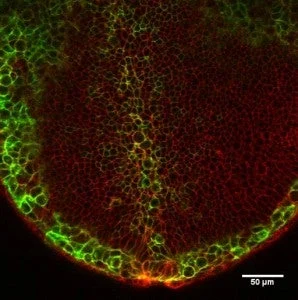
The cell is the basic structural and functional unit of all uni- and multicellular life and exhibits fascinating complexity and organization. Remarkable advances in optical microscopy and live cell imaging now make it possible to probe complex processes from the molecular to subcellular and from single cells to tissues. Combined with traditional genetics, powerful gene-editing technologies and genome-level analyses, the cell biologist now has an unprecedented set of tools available to probe mechanistic underpinnings of biological processes. Research at UVA features rich and diverse training in modern Cell Biology from a creative and internationally-recognized faculty. Research in Cell Biology employs the latest cellular, molecular, biophysical, and microscopic technologies, including engineered mutant mice, Drosophila, Xenopus, C. elegans, and Zebrafish. At the individual cell level, we specialize in exploring intracellular transport, organelle dynamics, cell compartmentalization, cytoskeleton, and signaling in the context of complex cellular behaviors, such as mitosis, cell adhesion, motility, mechanotransduction, and cell polarity. Training in cell biology forms the basis not only for making new discoveries into the fundamental mechanisms of how proteins function in cellular contexts, and their relationship to cell division, differentiation and morphogenesis, but also for understanding and exploring the links to human diseases where the fundamental processes of cytoskeletal dynamics, signal transduction, mitosis, cell adhesion, motility, mechanotransduction, and polarity go awry. These studies thus create opportunities to address fundamental mechanisms of diseases, including cancer, birth defects, cognitive impairment, and tissue degeneration.
Faculty
Basic and translational brain tumor research
Roger Abounader
Basic and translational brain tumor research

Innate immunity, Cell clearance, Inflammatory and autoimmune disease
Sanja Arandjelovic
Innate immunity, Cell clearance, Inflammatory and autoimmune disease

Systems biology approaches to study gene dosage in neurodevelopment and neurodevelopmental disorders
Sameer Subhash Bajikar
Systems biology approaches to study gene dosage in neurodevelopment and neurodevelopmental disorders

Biophysics of membrane pore formation; research and therapeutic applications of lipid nanoparticles.
Huan Bao
Biophysics of membrane pore formation; research and therapeutic applications of lipid nanoparticles.


Hematology and Oncology, Cell Biology, Lipid Signaling, Cancer Cell Signaling, and RNA Biology
Charles Edward Chalfant
Hematology and Oncology, Cell Biology, Lipid Signaling, Cancer Cell Signaling, and RNA Biology

Adult-born neurons, perineuronal nets, and microglia in hippocampal plasticity and behavior in health and disease
Elise Cope
Adult-born neurons, perineuronal nets, and microglia in hippocampal plasticity and behavior in health and disease

Neuron-glia and glial-glial interactions
Jaeda Coutinho-Budd
Neuron-glia and glial-glial interactions

Cellular and molecular mechanisms of Neisserial pathogenesis
Alison K. Criss
Cellular and molecular mechanisms of Neisserial pathogenesis

Host/pathogen Interaction - Chlamydia Infection
Isabelle Derre
Host/pathogen Interaction - Chlamydia Infection

Ion channels and Ca2+-signaling in inflammation, immunity and tissue homeostasis
Bimal N. Desai
Ion channels and Ca2+-signaling in inflammation, immunity and tissue homeostasis

Cell Adhesion and Adhesion-Dependent Cell Signaling in Vertebrate Morphogenesis
Douglas W. DeSimone, PH.D.
Cell Adhesion and Adhesion-Dependent Cell Signaling in Vertebrate Morphogenesis

Neural Development; Cell Division in Neural Stem Cells; Axon Outgrowth and Guidance
Noelle Dwyer
Neural Development; Cell Division in Neural Stem Cells; Axon Outgrowth and Guidance

Cytoskeletal architecture, dynamics and roles in cellular physiology and disease; High-resolution live cell and tissue imaging
Seham Ebrahim
Cytoskeletal architecture, dynamics and roles in cellular physiology and disease; High-resolution live cell and tissue imaging

Clinical Chemistry and Toxicology. Medical Automation Research. Neurotransmitters, cell surface receptors and intracellular second messengers.
Robin A. Felder
Clinical Chemistry and Toxicology. Medical Automation Research. Neurotransmitters, cell surface receptors and intracellular second messengers.

Chromosome organization; Nucleosome structure; Histone marks; Structural cell biology
Lu Gan
Chromosome organization; Nucleosome structure; Histone marks; Structural cell biology

Acute Myeloid Leukemia: molecular and cellular biology events which mediate aberrant epigenetic and transcriptional mechanisms during disease establishment and progression
Francine E. Garrett-Bakelman
Acute Myeloid Leukemia: molecular and cellular biology events which mediate aberrant epigenetic and transcriptional mechanisms during disease establishment and progression

Vascular wall remodeling, intimal hyperplasia, stenosis, aneurysm, retinal degeneration.
Lian-Wang Guo
Vascular wall remodeling, intimal hyperplasia, stenosis, aneurysm, retinal degeneration.

Regeneration and Systemic Responses to Tissue Damage
Adrian J. Halme
Regeneration and Systemic Responses to Tissue Damage

Understanding Cellular and Molecular Mechanisms Leading to Blood Vessel Formation
Karen Kemper Hirschi
Understanding Cellular and Molecular Mechanisms Leading to Blood Vessel Formation

The Role of Mitochondrial Fusion and Fission in Tumorigenesis.
David F Kashatus
The Role of Mitochondrial Fusion and Fission in Tumorigenesis.

Advancement in the design of imaging agents; molecular imaging and radiological sciences.
Kimberly Kelly
Advancement in the design of imaging agents; molecular imaging and radiological sciences.

Architecture and function of biological membranes
Anne Kenworthy
Architecture and function of biological membranes

Regulation of Polarized Morphogenesis
Keith G. Kozminski
Regulation of Polarized Morphogenesis

The role of glia in the development, maintenance and regeneration of the nervous system
Sarah C Kucenas
The role of glia in the development, maintenance and regeneration of the nervous system

Precision medicine, translational science, regeneration, organoids, high resolution imaging, computational modeling
Saurabh Kulkarni
Precision medicine, translational science, regeneration, organoids, high resolution imaging, computational modeling

RNA regulatory networks and RNA binding proteins during cardiovascular development and in cardiovascular disease
Muge N Kuyumcu-Martinez
RNA regulatory networks and RNA binding proteins during cardiovascular development and in cardiovascular disease

Molecular and metabolic adaptations of cancer cells.
MariCarmen Lafita Navarro
Molecular and metabolic adaptations of cancer cells.

Restoration of Homeostasis in Disease
Gordon W. Laurie
Restoration of Homeostasis in Disease


Composition, Biophysics and Physiology of Cellular Membranes
Ilya Levental
Composition, Biophysics and Physiology of Cellular Membranes

Wnt/PCP signaling in inner ear development Mouse models for human deafness Wnt/PCP signaling in neural tube closure
Xiaowei Lu
Wnt/PCP signaling in inner ear development Mouse models for human deafness Wnt/PCP signaling in neural tube closure

Immune System Regulation of Cardiometabolic Disease
Coleen A. McNamara
Immune System Regulation of Cardiometabolic Disease


Regulation and function of tyrosine phosphorylation in complex networks
Kristen Naegle
Regulation and function of tyrosine phosphorylation in complex networks

Mitochondrial regulation of innate immune and antiviral signaling
Laura Elizabeth Newman
Mitochondrial regulation of innate immune and antiviral signaling

Understanding the neural code underlying motivated behaviors like feeding, drinking, and social interaction, with a focus on how malfunction in associated brain areas are involved in diseases like addiction and eating disorders
Edward Horng-An Nieh
Understanding the neural code underlying motivated behaviors like feeding, drinking, and social interaction, with a focus on how malfunction in associated brain areas are involved in diseases like addiction and eating disorders


Investigating the cell-biological foundations of development
Ariel Pani
Investigating the cell-biological foundations of development

Developmental Genetics, Evolution and Regeneration
David Parichy
Developmental Genetics, Evolution and Regeneration

Director of Graduate Studies for Microbiology, Immunology and Cancer Biology
Lucy F. Pemberton
Director of Graduate Studies for Microbiology, Immunology and Cancer Biology

Delineate the physiological importance and structure-function relationship of ER-associated degradation in humans.
Ling Qi
Delineate the physiological importance and structure-function relationship of ER-associated degradation in humans.

Chromosome segregation and aneuploidy in meiosis and mitosis
Stefanie Redemann
Chromosome segregation and aneuploidy in meiosis and mitosis

Assembly and Plasticity of Neural Circuits
Adema Ribic
Assembly and Plasticity of Neural Circuits


Regulation of neural stem cell proliferation during development and adulthood
Sarah Siegrist
Regulation of neural stem cell proliferation during development and adulthood

Gram-positive pathogenesis; type VII secretion; impact of secreted effectors on host-pathogen interactions and immune responses
Brady Spencer
Gram-positive pathogenesis; type VII secretion; impact of secreted effectors on host-pathogen interactions and immune responses

Spatial Cell Biology. Neuronal Morphogenesis and Disease. Cancer Migration and Invasion.
Elias T Spiliotis
Spatial Cell Biology. Neuronal Morphogenesis and Disease. Cancer Migration and Invasion.

Mechanisms of chromosome segregation in Mitosis and generation of Chromosomal Instability in tumors
P. Todd Stukenberg
Mechanisms of chromosome segregation in Mitosis and generation of Chromosomal Instability in tumors

Role of endoplasmic reticulum-associated protein degradation in health and disease
Shengyi Iris Sun
Role of endoplasmic reticulum-associated protein degradation in health and disease

Cell behavior and morphogenesis during early mouse development.
Ann E. Sutherland
Cell behavior and morphogenesis during early mouse development.

Regulation of cell-surface stability and intracellular trafficking of membrane proteins in epithelial cells
Agnieszka Swiatecka-Urban
Regulation of cell-surface stability and intracellular trafficking of membrane proteins in epithelial cells


Understanding Protein and RNA regulations of gene expression via chromatin structure in myeloid cell development and diseases
Bon Q Trinh
Understanding Protein and RNA regulations of gene expression via chromatin structure in myeloid cell development and diseases

Vascular Biology, Nanotechnology, Biomaterials, Drug Delivery
Nick Dimitrios Tsihlis
Vascular Biology, Nanotechnology, Biomaterials, Drug Delivery

Cancer biology and immunology, Immuno-oncology, Immunometabolism, Genetically-engineered mouse models
Qiwei Wang
Cancer biology and immunology, Immuno-oncology, Immunometabolism, Genetically-engineered mouse models

The formation, function, coordination, and pathology of multinucleated cell types that make up the placenta and musculoskeletal system.
Jarred M Whitlock
The formation, function, coordination, and pathology of multinucleated cell types that make up the placenta and musculoskeletal system.

Endosomal function and dysfunction in neurons. Development of the nervous system: cytoskeleton and membrane traffic in axon and dendrite growth.
Bettina Winckler
Endosomal function and dysfunction in neurons. Development of the nervous system: cytoskeleton and membrane traffic in axon and dendrite growth.

Investigating regeneration through genetics and single-cell analysis
Melanie I. Worley
Investigating regeneration through genetics and single-cell analysis

Regulation of Gene Expression, Development and Tumor Progression by TGF beta Signaling
David Wotton
Regulation of Gene Expression, Development and Tumor Progression by TGF beta Signaling

Cardiovascular Development and Cerebrovascular Pathologies
Joshua D Wythe
Cardiovascular Development and Cerebrovascular Pathologies

Researching fundamental roles of the epigenome in control of the context-specific transcriptional programs.
Kexin Xu
Researching fundamental roles of the epigenome in control of the context-specific transcriptional programs.

Mechanisms of Huntington's Disease Pathogenesis
Scott O. Zeitlin
Mechanisms of Huntington's Disease Pathogenesis

Genetics, Functional Genomics, Epigenetics, Lung repair/regeneration, Metabolic regulation, Alveolar stem cells, Chromatin interaction, Innate immune response, Live-cell imaging
Anny Xiaobo Zhou
Genetics, Functional Genomics, Epigenetics, Lung repair/regeneration, Metabolic regulation, Alveolar stem cells, Chromatin interaction, Innate immune response, Live-cell imaging
