Genetics
About
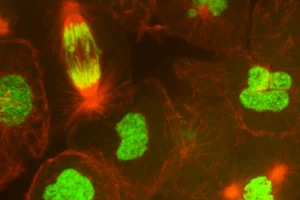
Research in Genetics at UVA seeks to understand how genetic information is encoded, inherited, decoded, and differentially regulated to produce the vast diversity observed in biology.While the genome revolution has generated vast amounts of data on sequences and expression, genetics bridges the gap between structure (sequence) and biological function. Fueled by powerful technologies for determining DNA sequences and surveying gene expression, geneticists seek to determine the function of every gene in the genome. Functional data from genetic screens holds great promise for medicine, agriculture, pharmaceuticals and many other aspects of our lives.
The genetics program at the University of Virginia provides training opportunities with numerous faculty members across grounds. It encompasses the full spectrum of genetic research, from genes to genomes to populations, in a diverse range of biological systems. We train graduates for careers in genetics at academic institutions, biotechnology and pharmaceutical companies, private research institutes, and government research laboratories.
Faculty
The Ubiquitin System and Human Cancer
Tarek A. Abbas
The Ubiquitin System and Human Cancer

Systems biology approaches to study gene dosage in neurodevelopment and neurodevelopmental disorders
Sameer Subhash Bajikar
Systems biology approaches to study gene dosage in neurodevelopment and neurodevelopmental disorders

Genome instability syndromes in cancer and immune deficiencies
Anja Katrin Bielinsky
Genome instability syndromes in cancer and immune deficiencies

Molecular mechanisms linking innate immune and insulin signaling to control cell growth and metabolism
Michelle Bland
Molecular mechanisms linking innate immune and insulin signaling to control cell growth and metabolism


Natural Killer Cells, Viral Immunity, Genetic basis of host resistance to viral infection, Tumor immunity, Immune cell regulation
Michael G. Brown
Natural Killer Cells, Viral Immunity, Genetic basis of host resistance to viral infection, Tumor immunity, Immune cell regulation


Computational genomics and bioinformatics; long-read sequencing; structural variation; genome assembly and pangenomics; human genetic variation and disease genomics
Zechen Chong, Ph.D.
Computational genomics and bioinformatics; long-read sequencing; structural variation; genome assembly and pangenomics; human genetic variation and disease genomics

Epigenetic mechanisms involved in complex human disease
Jessica J. Connelly
Epigenetic mechanisms involved in complex human disease

Neuron-glia and glial-glial interactions
Jaeda Coutinho-Budd
Neuron-glia and glial-glial interactions

Herpesvirus gene expression & RNA biology
Sarah Dremel
Herpesvirus gene expression & RNA biology

Neural Development; Cell Division in Neural Stem Cells; Axon Outgrowth and Guidance
Noelle Dwyer
Neural Development; Cell Division in Neural Stem Cells; Axon Outgrowth and Guidance

Systems Genetics of Skeletal Development and Maintenance
Charles R. Farber
Systems Genetics of Skeletal Development and Maintenance

RNA-protein interactions in antiviral immunity and autoimmune diseases.
Mariano A. Garcia-Blanco
RNA-protein interactions in antiviral immunity and autoimmune diseases.

Molecular embryology--gene regulation in cells committed to specific developmental lineages
Robert M. Grainger
Molecular embryology--gene regulation in cells committed to specific developmental lineages

Regeneration and Systemic Responses to Tissue Damage
Adrian J. Halme
Regeneration and Systemic Responses to Tissue Damage

Understanding Cellular and Molecular Mechanisms Leading to Blood Vessel Formation
Karen Kemper Hirschi
Understanding Cellular and Molecular Mechanisms Leading to Blood Vessel Formation

Metabolic and Genetic Regulation of Aging, Redox Biology, DNA Repair, Comparative and Functional Genomics, Stress Resistance, Drug Discovery, Evolutionary Biology, Synthetic and Systems Biology for Evolutionary Engineering, Adaptive Evolution, Mitochondrial Signaling, Neurodegenerative Diseases
Alaattin Kaya
Metabolic and Genetic Regulation of Aging, Redox Biology, DNA Repair, Comparative and Functional Genomics, Stress Resistance, Drug Discovery, Evolutionary Biology, Synthetic and Systems Biology for Evolutionary Engineering, Adaptive Evolution, Mitochondrial Signaling, Neurodegenerative Diseases

Regulation of Polarized Morphogenesis
Keith G. Kozminski
Regulation of Polarized Morphogenesis

The role of glia in the development, maintenance and regeneration of the nervous system
Sarah C Kucenas
The role of glia in the development, maintenance and regeneration of the nervous system

Precision medicine, translational science, regeneration, organoids, high resolution imaging, computational modeling
Saurabh Kulkarni
Precision medicine, translational science, regeneration, organoids, high resolution imaging, computational modeling

Genetic and Epigenetic stability in human cancer
Wenpeng Liu
Genetic and Epigenetic stability in human cancer

Statistical Genetics, Genetic Epidemiology, Biostatistics, Network analysis
Ani Manichaikul
Statistical Genetics, Genetic Epidemiology, Biostatistics, Network analysis

Identifying tumor selective drug targets, Understanding the genetic drivers of tumor immune evasion
Timothy D Martin
Identifying tumor selective drug targets, Understanding the genetic drivers of tumor immune evasion

Genetic variation, Complex diseases, Coronary artery disease, Genomics, Epigenomics, Regulatory mechanisms, Vascular biology, Pharmacology and Physiology
Clint L. Miller
Genetic variation, Complex diseases, Coronary artery disease, Genomics, Epigenomics, Regulatory mechanisms, Vascular biology, Pharmacology and Physiology

Cell signaling, stem cell biology, molecular and epigenetic mechanisms of blood and breast cancers
Golam Mohi
Cell signaling, stem cell biology, molecular and epigenetic mechanisms of blood and breast cancers


Investigating the cell-biological foundations of development
Ariel Pani
Investigating the cell-biological foundations of development

Developmental Genetics, Evolution and Regeneration
David Parichy
Developmental Genetics, Evolution and Regeneration

Mechanisms of tissue/organ homeostasis and tumorigeensis
Kwon Park
Mechanisms of tissue/organ homeostasis and tumorigeensis

Understanding the cellular mechanisms by which seizures are initiated in SCN8A epileptic encephalopathy (DEE13) and temporal lobe epilepsy. My lab uses a number of experimental techniques including patch clamp electrophysiology and in vivo seizure monitor
Manoj Patel
Understanding the cellular mechanisms by which seizures are initiated in SCN8A epileptic encephalopathy (DEE13) and temporal lobe epilepsy. My lab uses a number of experimental techniques including patch clamp electrophysiology and in vivo seizure monitor

Director of Graduate Studies for Microbiology, Immunology and Cancer Biology
Lucy F. Pemberton
Director of Graduate Studies for Microbiology, Immunology and Cancer Biology

Gene regulatory networks, Systems genetics, Multi-omic data integration, Network science
John Platig, PhD
Gene regulatory networks, Systems genetics, Multi-omic data integration, Network science

Developmental Cognitive Neuroscience
Meghan H. Puglia, PhD
Developmental Cognitive Neuroscience

Genomics, Molecular Evolution, Algorithm Design and Analysis
Aakrosh Ratan
Genomics, Molecular Evolution, Algorithm Design and Analysis

Human Immunodeficiency Virus Gene Expression; Human Endogenous Viruses; SARS-CoV-2 Protein Trafficking; Post-transcriptional Gene Regulation
David M. Rekosh
Human Immunodeficiency Virus Gene Expression; Human Endogenous Viruses; SARS-CoV-2 Protein Trafficking; Post-transcriptional Gene Regulation

Genetic basis of common human disease, including type 1 diabetes, diabetic complications, ischemic stroke, atherosclerosis
Stephen S. Rich
Genetic basis of common human disease, including type 1 diabetes, diabetic complications, ischemic stroke, atherosclerosis

Proteoform Systems Biology: proteogenomic approaches to uncover the role of proteomic variation in human disease
Gloria M. Sheynkman
Proteoform Systems Biology: proteogenomic approaches to uncover the role of proteomic variation in human disease

Molecular and genetic determinants of atherosclerosis and cardiometabolic disorders.
Weibin Shi
Molecular and genetic determinants of atherosclerosis and cardiometabolic disorders.

Regulation of neural stem cell proliferation during development and adulthood
Sarah Siegrist
Regulation of neural stem cell proliferation during development and adulthood

Transcriptional Silencing and Aging in Yeast
Jeffrey S. Smith
Transcriptional Silencing and Aging in Yeast

Mechanisms of chromosome segregation in Mitosis and generation of Chromosomal Instability in tumors
P. Todd Stukenberg
Mechanisms of chromosome segregation in Mitosis and generation of Chromosomal Instability in tumors

Cell behavior and morphogenesis during early mouse development.
Ann E. Sutherland
Cell behavior and morphogenesis during early mouse development.

Understanding Protein and RNA regulations of gene expression via chromatin structure in myeloid cell development and diseases
Bon Q Trinh
Understanding Protein and RNA regulations of gene expression via chromatin structure in myeloid cell development and diseases

Genome instability in cancer and repeat expansion diseases
Yuh-Hwa Wang
Genome instability in cancer and repeat expansion diseases

Identification of genes and pathways that cause or modify cardiac hypertrophy and heart failure.
Matthew J Wolf
Identification of genes and pathways that cause or modify cardiac hypertrophy and heart failure.

Regulation of Gene Expression, Development and Tumor Progression by TGF beta Signaling
David Wotton
Regulation of Gene Expression, Development and Tumor Progression by TGF beta Signaling

Cardiovascular Development and Cerebrovascular Pathologies
Joshua D Wythe
Cardiovascular Development and Cerebrovascular Pathologies

Bioinformatics methodology development; Epigenetics and chromatin biology; Transcriptional regulation; Cancer genomics and epigenomics; Statistical methods for biomedical data integration; Advanced machine learning; Theoretical and computational biophysics
Chongzhi Zang
Bioinformatics methodology development; Epigenetics and chromatin biology; Transcriptional regulation; Cancer genomics and epigenomics; Statistical methods for biomedical data integration; Advanced machine learning; Theoretical and computational biophysics

Genetics, Functional Genomics, Epigenetics, Lung repair/regeneration, Metabolic regulation, Alveolar stem cells, Chromatin interaction, Innate immune response, Live-cell imaging
Anny Xiaobo Zhou
Genetics, Functional Genomics, Epigenetics, Lung repair/regeneration, Metabolic regulation, Alveolar stem cells, Chromatin interaction, Innate immune response, Live-cell imaging
