Microbiology
About
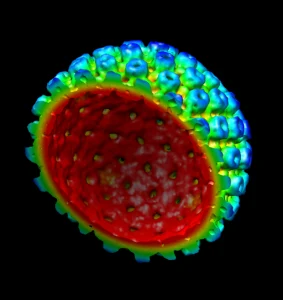
Research in Microbiology at UVA spans the fundamental molecular processes of viruses, bacteria, fungi, and parasites of major importance to human health.Many fundamental biological processes have been uncovered through the study of bacteria, viruses and eukaryotic unicellular microorganisms, and these studies have also revealed mechanisms by which infectious agents cause disease. Our students and faculty examine how microbes replicate, invade the host cell, colonize the host and interact with the immune system. To this end we use state-of-the-art experimental approaches drawn from the fields of molecular biology, biochemistry, genetics, structural biology, cell biology, physiology, cellular and sub-cellular imaging, genomics and bioinformatics.
The microbiology research community at UVA spans multiple basic science and clinical departments. It features numerous laboratories that are engaged in highly interactive and collaborative research, with many researchers sharing authorship on high-profile publications. Our research findings provide insights into basic biology and also provide foundations for translational applications, such as vaccine development and new therapeutic approaches for treating infections.
The robust educational opportunities available include specialized coursework, laboratory rotations, journal clubs, and weekly seminars highlighting the work of trainees as well as that of internationally renowned scientists.
Training in Microbiology at UVA equips our graduates to pursue diverse career options, including postdoctoral positions in academia, as well as jobs in government, the pharmaceutical and biotechnology industries, collegiate teaching, public policy, consulting and patent law.
Faculty
Understanding the Molecular Basis of Macular Degeneration in Order to Hasten the Eradication of Blindness
Jayakrishna Ambati
Understanding the Molecular Basis of Macular Degeneration in Order to Hasten the Eradication of Blindness
Molecular Mechanisms for Membrane Transport and Cell Signaling
David S. Cafiso
Molecular Mechanisms for Membrane Transport and Cell Signaling
Role of Arf family GTPases in vesicular transport and cytoskeleton assembly.<br> Cell Biology of bacterial pathogenesis. <br>The innate immune response to bacterial infection.
James E. Casanova
Role of Arf family GTPases in vesicular transport and cytoskeleton assembly.<br> Cell Biology of bacterial pathogenesis. <br>The innate immune response to bacterial infection.
Herpes Simplex Virus Infection of Neurons
Anna Cliffe
Herpes Simplex Virus Infection of Neurons
Biophysical Chemistry: Membrane protein structure, function, and dynamics
Linda Columbus
Biophysical Chemistry: Membrane protein structure, function, and dynamics
The maternal and infant microbiome in childhood growth and immunity
Carrie A. Cowardin
The maternal and infant microbiome in childhood growth and immunity
Cellular and molecular mechanisms of Neisserial pathogenesis
Alison K. Criss
Cellular and molecular mechanisms of Neisserial pathogenesis
Host/pathogen Interaction - Chlamydia Infection
Isabelle Derre
Host/pathogen Interaction - Chlamydia Infection
Herpesvirus gene expression & RNA biology
Sarah Dremel
Herpesvirus gene expression & RNA biology
Structure and Function of Macromolecular Complexes Using Electron Microscopy
Edward H. Egelman
Structure and Function of Macromolecular Complexes Using Electron Microscopy
Innate immunity, chronic disease, host-parasite interactions, Toxoplasma gondii, proteomics
Sarah E Ewald
Innate immunity, chronic disease, host-parasite interactions, Toxoplasma gondii, proteomics
Bacterial attachment and biofilms, microbial transport in porous media
Roseanne M. Ford
Bacterial attachment and biofilms, microbial transport in porous media
Super-resolution fluorescence imaging of bacterial cells
Andreas Gahlmann
Super-resolution fluorescence imaging of bacterial cells
Exploring new therapeutics avenues to treat Multiple Sclerosis.
Alban Gaultier
Exploring new therapeutics avenues to treat Multiple Sclerosis.
Mechanisms of Genetic and Metabolic Adaptation in the Malaria Parasite, Plasmodium falciparum
Jennifer Guler
Mechanisms of Genetic and Metabolic Adaptation in the Malaria Parasite, Plasmodium falciparum
Immune regulation for HCV infection and chronic liver inflammation
Young S. Hahn
Immune regulation for HCV infection and chronic liver inflammation
Immune response to infectious disease in the CNS
Tajie H. Harris
Immune response to infectious disease in the CNS
Systems-biology approaches to cancer biology and virology.
Kevin A. Janes
Systems-biology approaches to cancer biology and virology.
Bacterial cell signaling, host-pathogen interactions, intestinal pathogens
Melissa M. Kendall
Bacterial cell signaling, host-pathogen interactions, intestinal pathogens
Regulation of Polarized Morphogenesis
Keith G. Kozminski
Regulation of Polarized Morphogenesis
Systems biology, infectious disease, cancer, toxicology, metabolic engineering
Jason Papin
Systems biology, infectious disease, cancer, toxicology, metabolic engineering
Bioanalytical tools for inflammatory disease
Rebecca Pompano
Bioanalytical tools for inflammatory disease
Human Immunodeficiency Virus Gene Expression; Human Endogenous Viruses; SARS-CoV-2 Protein Trafficking; Post-transcriptional Gene Regulation
David M. Rekosh
Human Immunodeficiency Virus Gene Expression; Human Endogenous Viruses; SARS-CoV-2 Protein Trafficking; Post-transcriptional Gene Regulation
Influence of commensal microbes on immune homeostasis, anti-tumor immunity, and metastasis
Melanie Rutkowski
Influence of commensal microbes on immune homeostasis, anti-tumor immunity, and metastasis
Gram-positive pathogenesis; type VII secretion; impact of secreted effectors on host-pathogen interactions and immune responses
Brady Spencer
Gram-positive pathogenesis; type VII secretion; impact of secreted effectors on host-pathogen interactions and immune responses
Viral immunology, Cancer immunology, Aging, Mucosal Immunology
Jie Sun
Viral immunology, Cancer immunology, Aging, Mucosal Immunology
Prokaryotic immune systems, bacteriophage virology, programmed cell death, pore-forming proteins, evolution of immunity, cGAS-STING, protein engineering
Uday Tak
Prokaryotic immune systems, bacteriophage virology, programmed cell death, pore-forming proteins, evolution of immunity, cGAS-STING, protein engineering
Biomembrane Structure and Function; Cell Entry of Enveloped Viruses; Neurosecretion by Exocytosis; Structure of Bacterial Pathogen Membrane Proteins; Lipid-Protein Interactions
Lukas K. Tamm
Biomembrane Structure and Function; Cell Entry of Enveloped Viruses; Neurosecretion by Exocytosis; Structure of Bacterial Pathogen Membrane Proteins; Lipid-Protein Interactions
Cancer biology and immunology, Immuno-oncology, Immunometabolism, Genetically-engineered mouse models
Qiwei Wang
Cancer biology and immunology, Immuno-oncology, Immunometabolism, Genetically-engineered mouse models
The immune response to common cold and allergens in health and disease.
Judith A. Woodfolk
The immune response to common cold and allergens in health and disease.
Unraveling the role of host microbe interactions in autoimmune diseases
Daniel Fernando Zegarra-Ruiz
Unraveling the role of host microbe interactions in autoimmune diseases
Pathogenesis of infectious diseases and the development of new therapies and vaccines for infectious diseases and cancers.
Steven L. Zeichner, MD, PhD
Pathogenesis of infectious diseases and the development of new therapies and vaccines for infectious diseases and cancers.