Microbiology
About
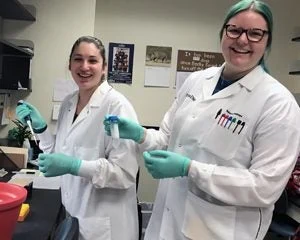
The Microbiology, Immunology, and Cancer Biology (MIC) Department is home to the PhD degree-granting program in Microbiology. PhD students study under internationally-recognized scientists in the areas of immunology, cancer biology, virology, bacteriology, infectious diseases, biodefense, cell-signaling, and gene regulation. The wide variety of choices in laboratories and coursework coupled with flexible departmental requirements enables each student to design a custom-tailored training program. For more information, click here…
Program Faculty
Basic and translational brain tumor research
Roger Abounader
Basic and translational brain tumor research
Genetic approaches, cellular and molecular biology of intracellular pathogen infection
Herve Agaisse, PhD
Genetic approaches, cellular and molecular biology of intracellular pathogen infection
Engineering cancer-killing T cells to overcome obstacles in solid tumors
Kristin Anderson
Engineering cancer-killing T cells to overcome obstacles in solid tumors
Innate immunity, Cell clearance, Inflammatory and autoimmune disease
Sanja Arandjelovic
Innate immunity, Cell clearance, Inflammatory and autoimmune disease
Engineering programmable immunotherapies for solid tumors
Stefanie R. Bailey
Engineering programmable immunotherapies for solid tumors
Natural Killer Cells, Viral Immunity, Genetic basis of host resistance to viral infection, Tumor immunity, Immune cell regulation
Michael G. Brown
Natural Killer Cells, Viral Immunity, Genetic basis of host resistance to viral infection, Tumor immunity, Immune cell regulation
Pathways to enhance T cell function in tumors.
Timothy N. Bullock, PhD
Pathways to enhance T cell function in tumors.
Role of Arf family GTPases in vesicular transport and cytoskeleton assembly.<br> Cell Biology of bacterial pathogenesis. <br>The innate immune response to bacterial infection.
James E. Casanova
Role of Arf family GTPases in vesicular transport and cytoskeleton assembly.<br> Cell Biology of bacterial pathogenesis. <br>The innate immune response to bacterial infection.
Herpes Simplex Virus Infection of Neurons
Anna Cliffe
Herpes Simplex Virus Infection of Neurons
The maternal and infant microbiome in childhood growth and immunity
Carrie A. Cowardin
The maternal and infant microbiome in childhood growth and immunity
Cellular and molecular mechanisms of Neisserial pathogenesis
Alison K. Criss
Cellular and molecular mechanisms of Neisserial pathogenesis
Host/pathogen Interaction - Chlamydia Infection
Isabelle Derre
Host/pathogen Interaction - Chlamydia Infection
Ion channels and Ca2+-signaling in inflammation, immunity and tissue homeostasis
Bimal N. Desai
Ion channels and Ca2+-signaling in inflammation, immunity and tissue homeostasis
Systems Immunology, Cancer Systems Biology, , Neonatal and Maternal Immunology
Sepideh Dolatshahi
Systems Immunology, Cancer Systems Biology, , Neonatal and Maternal Immunology
Herpesvirus gene expression & RNA biology
Sarah Dremel
Herpesvirus gene expression & RNA biology
Tumor microenvironment and mechanisms of tumor neovascularization
Andrew Dudley, PhD
Tumor microenvironment and mechanisms of tumor neovascularization
Immune mechanisms of pathogenic antibody production in allergy and autoimmunity
Loren D. Erickson
Immune mechanisms of pathogenic antibody production in allergy and autoimmunity
Innate immunity, chronic disease, host-parasite interactions, Toxoplasma gondii, proteomics
Sarah E Ewald
Innate immunity, chronic disease, host-parasite interactions, Toxoplasma gondii, proteomics
Basement Membrane Structure and Metalloproteinases
Jay W. Fox, PhD
Basement Membrane Structure and Metalloproteinases
RNA-protein interactions in antiviral immunity and autoimmune diseases.
Mariano A. Garcia-Blanco
RNA-protein interactions in antiviral immunity and autoimmune diseases.
Mechanisms of Genetic and Metabolic Adaptation in the Malaria Parasite, Plasmodium falciparum
Jennifer Guler
Mechanisms of Genetic and Metabolic Adaptation in the Malaria Parasite, Plasmodium falciparum
Immune regulation for HCV infection and chronic liver inflammation
Young S. Hahn
Immune regulation for HCV infection and chronic liver inflammation
Post Transcriptional Gene Regulation and the Molecular Biology of Human Retroviruses
Marie-Louise Hammarskjold
Post Transcriptional Gene Regulation and the Molecular Biology of Human Retroviruses
Immune response to infectious disease in the CNS
Tajie H. Harris
Immune response to infectious disease in the CNS
The Role of Mitochondrial Fusion and Fission in Tumorigenesis.
David F Kashatus
The Role of Mitochondrial Fusion and Fission in Tumorigenesis.
Bacterial cell signaling, host-pathogen interactions, intestinal pathogens
Melissa M. Kendall
Bacterial cell signaling, host-pathogen interactions, intestinal pathogens
Hematologic malignancies; bone marrow disorders; leukemia; large granular lymphocyte (LGL)
Thomas P Loughran, Jr.
Hematologic malignancies; bone marrow disorders; leukemia; large granular lymphocyte (LGL)
Neuron-glia communications, brain plasticity and homeostasis, glial responses to neurodegeneration
Tsai-Yi Lu
Neuron-glia communications, brain plasticity and homeostasis, glial responses to neurodegeneration
Understanding How Immunological Pathways Contribute to Neurodegenerative, Neurodevelopmental, Mental and Behavior Disorders
John R. Lukens
Understanding How Immunological Pathways Contribute to Neurodegenerative, Neurodevelopmental, Mental and Behavior Disorders
Immune System Regulation of Cardiometabolic Disease
Coleen A. McNamara
Immune System Regulation of Cardiometabolic Disease
Pathogenesis of diarrheagenic Escherichia coli and Shigella.
James P. Nataro
Pathogenesis of diarrheagenic Escherichia coli and Shigella.
Mitochondrial regulation of innate immune and antiviral signaling
Laura Elizabeth Newman
Mitochondrial regulation of innate immune and antiviral signaling
Mechanisms of tissue/organ homeostasis and tumorigeensis
Kwon Park
Mechanisms of tissue/organ homeostasis and tumorigeensis
Director of Graduate Studies for Microbiology, Immunology and Cancer Biology
Lucy F. Pemberton
Director of Graduate Studies for Microbiology, Immunology and Cancer Biology
Human Immunodeficiency Virus Gene Expression; Human Endogenous Viruses; SARS-CoV-2 Protein Trafficking; Post-transcriptional Gene Regulation
David M. Rekosh
Human Immunodeficiency Virus Gene Expression; Human Endogenous Viruses; SARS-CoV-2 Protein Trafficking; Post-transcriptional Gene Regulation
Anti-tumor immunity in brain tumors, Cancer Neuroscience
James Ross
Anti-tumor immunity in brain tumors, Cancer Neuroscience

Influence of commensal microbes on immune homeostasis, anti-tumor immunity, and metastasis
Melanie Rutkowski
Influence of commensal microbes on immune homeostasis, anti-tumor immunity, and metastasis
Gram-positive pathogenesis; type VII secretion; impact of secreted effectors on host-pathogen interactions and immune responses
Brady Spencer
Gram-positive pathogenesis; type VII secretion; impact of secreted effectors on host-pathogen interactions and immune responses
Immune Responses in asthma, pulmonary fibrosis, and lung injury.
Anne I. Sperling
Immune Responses in asthma, pulmonary fibrosis, and lung injury.
Viral immunology, Cancer immunology, Aging, Mucosal Immunology
Jie Sun
Viral immunology, Cancer immunology, Aging, Mucosal Immunology
Prokaryotic immune systems, bacteriophage virology, programmed cell death, pore-forming proteins, evolution of immunity, cGAS-STING, protein engineering
Uday Tak
Prokaryotic immune systems, bacteriophage virology, programmed cell death, pore-forming proteins, evolution of immunity, cGAS-STING, protein engineering
Cancer biology and immunology, Immuno-oncology, Immunometabolism, Genetically-engineered mouse models
Qiwei Wang
Cancer biology and immunology, Immuno-oncology, Immunometabolism, Genetically-engineered mouse models
The immune response to common cold and allergens in health and disease.
Judith A. Woodfolk
The immune response to common cold and allergens in health and disease.
Researching fundamental roles of the epigenome in control of the context-specific transcriptional programs.
Kexin Xu
Researching fundamental roles of the epigenome in control of the context-specific transcriptional programs.
Unraveling the role of host microbe interactions in autoimmune diseases
Daniel Fernando Zegarra-Ruiz
Unraveling the role of host microbe interactions in autoimmune diseases
Pathogenesis of infectious diseases and the development of new therapies and vaccines for infectious diseases and cancers.
Steven L. Zeichner, MD, PhD
Pathogenesis of infectious diseases and the development of new therapies and vaccines for infectious diseases and cancers.