Pharmacology
About
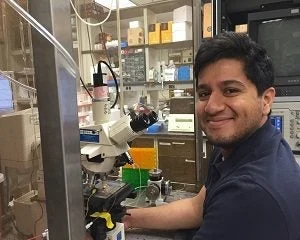
The Ph.D. program in Pharmacology is designed to provide students with training in the Pharmacological Sciences and thus prepare them for a career in modern biomedical research. Through a combination of laboratory research and didactic coursework, our program prepares students to shape the future and leave a mark on the world by pioneering the development of exciting and powerful new treatments, cures, and therapies while expanding our knowledge of human disease. For more information, click here…
Program Faculty
The Ubiquitin System and Human Cancer
Tarek A. Abbas
The Ubiquitin System and Human Cancer
Neurobiology of the cardiovascular and respiratory system, Central mechanisms linking cardiorespiratory function with affective state and emotion
Stephen B. Abbott
Neurobiology of the cardiovascular and respiratory system, Central mechanisms linking cardiorespiratory function with affective state and emotion
Mechanisms of neuromodulation in central neurons
Douglas A. Bayliss
Mechanisms of neuromodulation in central neurons
Circuit mechanisms of sleep and epilepsy
Mark P. Beenhakker
Circuit mechanisms of sleep and epilepsy
Molecular mechanisms linking innate immune and insulin signaling to control cell growth and metabolism
Michelle Bland
Molecular mechanisms linking innate immune and insulin signaling to control cell growth and metabolism
Immuno-Oncology, T cell therapy, TCR Discovery, Next generation cell therapy
Danielle R. Cook
Immuno-Oncology, T cell therapy, TCR Discovery, Next generation cell therapy
Ion channels and Ca2+-signaling in inflammation, immunity and tissue homeostasis
Bimal N. Desai
Ion channels and Ca2+-signaling in inflammation, immunity and tissue homeostasis
Cytoskeletal architecture, dynamics and roles in cellular physiology and disease; High-resolution live cell and tissue imaging
Seham Ebrahim
Cytoskeletal architecture, dynamics and roles in cellular physiology and disease; High-resolution live cell and tissue imaging
Innate immunity, chronic disease, host-parasite interactions, Toxoplasma gondii, proteomics
Sarah E Ewald
Innate immunity, chronic disease, host-parasite interactions, Toxoplasma gondii, proteomics
Brain metabolism, cognitive decline, cholesterol and Alzheimer's disease
Heather Ferris
Brain metabolism, cognitive decline, cholesterol and Alzheimer's disease
Acute Myeloid Leukemia: molecular and cellular biology events which mediate aberrant epigenetic and transcriptional mechanisms during disease establishment and progression
Francine E. Garrett-Bakelman
Acute Myeloid Leukemia: molecular and cellular biology events which mediate aberrant epigenetic and transcriptional mechanisms during disease establishment and progression
Exploring new therapeutics avenues to treat Multiple Sclerosis.
Alban Gaultier
Exploring new therapeutics avenues to treat Multiple Sclerosis.
Molecular mechanisms controlling insulin signaling and fat synthesis.
Thurl E Harris, PhD
Molecular mechanisms controlling insulin signaling and fat synthesis.
Immune response to infectious disease in the CNS
Tajie H. Harris
Immune response to infectious disease in the CNS
Translating our discoveries in the microcirculation to tangible benefits in patients.
Brant Isakson
Translating our discoveries in the microcirculation to tangible benefits in patients.
Role of lipid oxidation products in inflammation and vascular immunology in atherosclerosis and diabetes
Norbert Leitinger
Role of lipid oxidation products in inflammation and vascular immunology in atherosclerosis and diabetes
Composition, Biophysics and Physiology of Cellular Membranes
Ilya Levental
Composition, Biophysics and Physiology of Cellular Membranes
Chemical biology of sphingosine 1-phosphate
Kevin R. Lynch
Chemical biology of sphingosine 1-phosphate
Behavioral Pharmacology, Sex Differences, Animal Models of Addiction
Wendy J. Lynch
Behavioral Pharmacology, Sex Differences, Animal Models of Addiction
Identifying tumor selective drug targets, Understanding the genetic drivers of tumor immune evasion
Timothy D Martin
Identifying tumor selective drug targets, Understanding the genetic drivers of tumor immune evasion
Exploring epilepsy circuits then preventing seizures using gene therapies. Developing drug-inducible genetic switches for insulin replacement gene therapies.
Edward Perez-Reyes
Exploring epilepsy circuits then preventing seizures using gene therapies. Developing drug-inducible genetic switches for insulin replacement gene therapies.
Chromosome segregation and aneuploidy in meiosis and mitosis
Stefanie Redemann
Chromosome segregation and aneuploidy in meiosis and mitosis
Roles of complex signaling networks involved in the regulation of cardiovascular function and disease
Jeffrey J. Saucerman
Roles of complex signaling networks involved in the regulation of cardiovascular function and disease
Regulation of transcription by nuclear hormone receptors, transcriptional control of metabolism and inflammation, small molecule approaches to drug discovery
Ira G. Schulman
Regulation of transcription by nuclear hormone receptors, transcriptional control of metabolism and inflammation, small molecule approaches to drug discovery
Proteoform Systems Biology: proteogenomic approaches to uncover the role of proteomic variation in human disease
Gloria M. Sheynkman
Proteoform Systems Biology: proteogenomic approaches to uncover the role of proteomic variation in human disease
Identify the calcium signaling abnormalities that lead to vascular dysfunction and blood pressure elevation in cardiovascular disorders
Swapnil Sonkusare
Identify the calcium signaling abnormalities that lead to vascular dysfunction and blood pressure elevation in cardiovascular disorders
Role of endoplasmic reticulum-associated protein degradation in health and disease
Shengyi Iris Sun
Role of endoplasmic reticulum-associated protein degradation in health and disease
Iron metabolism and Immunometabolism in inflammation and autoimmune diseases
Kelsey Voss
Iron metabolism and Immunometabolism in inflammation and autoimmune diseases
Endosomal function and dysfunction in neurons. Development of the nervous system: cytoskeleton and membrane traffic in axon and dendrite growth.
Bettina Winckler
Endosomal function and dysfunction in neurons. Development of the nervous system: cytoskeleton and membrane traffic in axon and dendrite growth.
Identification of genes and pathways that cause or modify cardiac hypertrophy and heart failure.
Matthew J Wolf
Identification of genes and pathways that cause or modify cardiac hypertrophy and heart failure.