Our research group aims to unravel the mechanisms by which cells regulate ribosome function to maintain protein production and organelle proteostasis. Following synthesis, each newly made protein needs to be delivered to its final destination to fulfill its designated role. Our particular interest lies in understanding how these proteins reach their ultimate locations and how this process is perturbed in disease.
Dysfunction in this pathway results in protein aggregation, potentially leading to the onset of several neurodegenerative diseases. In the contrast, in cancer, cells up-regulate their protein synthesis machinery to cope with the heightened demand for cell proliferation.
We are actively investigating how the localization of newly made proteins is disrupted during disease progression, leading to organelle adaptation.
Our current research focuses on three research projects:
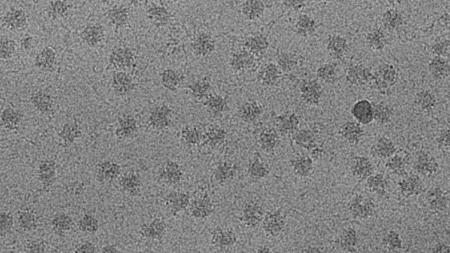
To achieve our research goals, our group develop and then employ a comprehensive set of integrative research approaches, including molecular and structural biology, biochemical analyses, and biophysical techniques. Notably, we emphasize the use of high-resolution single-particle cryo-electron microscopy, allowing us to gain detailed insights into the structural aspects of the processes under investigation.
How cancer cells become dormant?
Cell dormancy is a stress-induced process wherein cells exit cell division and become quiescent. Several factors trigger this stage, including nutrient deprivation and harsh environmental conditions. In response, cells initiate a strategy to "conserve their batteries," aiming to maintain survival. This conservation involves the downregulation of energy-consuming metabolic processes, such as protein biosynthesis. Importantly, the dormancy process is reversible, allowing cells to re-activate once stress conditions are alleviated.
Cryo-electron microscopy
Our group concentrates on utilizing high-resolution structure determination of molecular machines within the cell through cryo-electron microscopy (cryo-EM). Specifically, our focus is on the protein synthesis and protein folding machineries, examining how they are either upregulated or downregulated at the onset and progression of cancer and neurodegenerative diseases, respectively.