
Lab Members

About
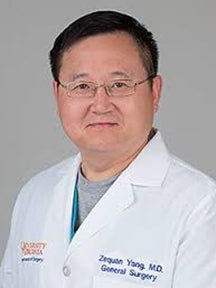
Zequan Yang, MD
Associate Professor of Surgery
As a clinician, Dr. Yang specializes in acute care surgery, trauma and surgical intensive care. As a scientist, his research has focused in the areas of myocardial and lung ischemia-reperfusion (IRI) for >20 years and septic shock for >10 years. His research utilizes small and large animal models of acute myocardial IRI, post-infarct LV remodeling, and sepsis. MRI is used to evaluate mouse myocardial infarct size and cardiac function. He has recently reported the novel finding of a cardiac-splenic axis that mediates inflammatory responses that exacerbate myocardial infarct and post-MI LV remodeling, as documented in several publications. He also laid the groundwork for utilizing topical neck cooling to attenuate inflammatory responses and preserve organ function during severe intra-abdominal sepsis in both murine and porcine models. Dr. Yang trains surgery residents both in the operating room as well as in laboratory research. As a PI on our NIH-funded R01, he helps guide all of our research studies focused on perfusion-based methods to treat acute lung injury. Dr. Yang is also a PI on our T32 Research Training Program for surgery residents in cardiovascular surgery.
Associate Professor of Surgery
As a clinician, Dr. Yang specializes in acute care surgery, trauma and surgical intensive care. As a scientist, his research has focused in the areas of myocardial and lung ischemia-reperfusion (IRI) for >20 years and septic shock for >10 years. His research utilizes small and large animal models of acute myocardial IRI, post-infarct LV remodeling, and sepsis. MRI is used to evaluate mouse myocardial infarct size and cardiac function. He has recently reported the novel finding of a cardiac-splenic axis that mediates inflammatory responses that exacerbate myocardial infarct and post-MI LV remodeling, as documented in several publications. He also laid the groundwork for utilizing topical neck cooling to attenuate inflammatory responses and preserve organ function during severe intra-abdominal sepsis in both murine and porcine models. Dr. Yang trains surgery residents both in the operating room as well as in laboratory research. As a PI on our NIH-funded R01, he helps guide all of our research studies focused on perfusion-based methods to treat acute lung injury. Dr. Yang is also a PI on our T32 Research Training Program for surgery residents in cardiovascular surgery.
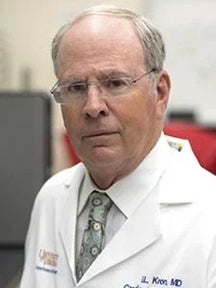
Irving Kron, MD
Professor of Surgery Emeritus
In 1993, Dr. Kron was named Chief of the Division of Thoracic and Cardiovascular Surgery at UVA and became the Program Director of the Thoracic Residency program. Dr. Kron helped increase the national visibility of the Division and the Thoracic Residency program at UVA. He was Chair of the Department of Surgery from 2002 – 2017. He developed a successful NIH-funded research laboratory where many residents and students have gained experience in thoracic surgical research. He is a PI on our NIH-funded research into lung ischemia-reperfusion injury and perfusion-based methods to treat ARDS as well as PI on our NHLBI-funded T32 Research Training Program for surgery residents in cardiovascular surgery.
Professor of Surgery Emeritus
In 1993, Dr. Kron was named Chief of the Division of Thoracic and Cardiovascular Surgery at UVA and became the Program Director of the Thoracic Residency program. Dr. Kron helped increase the national visibility of the Division and the Thoracic Residency program at UVA. He was Chair of the Department of Surgery from 2002 – 2017. He developed a successful NIH-funded research laboratory where many residents and students have gained experience in thoracic surgical research. He is a PI on our NIH-funded research into lung ischemia-reperfusion injury and perfusion-based methods to treat ARDS as well as PI on our NHLBI-funded T32 Research Training Program for surgery residents in cardiovascular surgery.
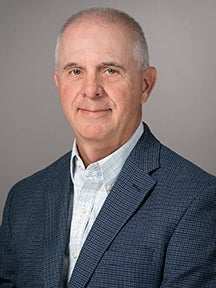
Victor Laubach, PhD
Professor of Surgery Emeritus
Email: laubach@virginia.edu
Dr. Laubach received a Ph.D. in Genetics from the George Washington University. His graduate research was conducted in the Pulmonary Branch of the NHLBI, Bethesda, MD, where he studied alpha-1-antitrypsin deficiency. Dr. Laubach then did postdoctoral research at Glaxo Wellcome Pharmaceuticals in Research Triangle Park, NC to study nitric oxide biology. In 1996 Dr. Laubach came to the UVA Department of Surgery where he directs laboratory research in discovering mechanisms of lung ischemia-reperfusion injury (IRI) after transplant and in perfusion-based methods to treat severe ARDS (via in vivo lung perfusion, IVLP) or prevent IRI (via ex vivo lung perfusion, EVLP). He is a PI on our NIH-funded research and PI on our NHLBI-funded T32 Research Training Program for surgery residents in cardiovascular surgery.
Professor of Surgery Emeritus
Email: laubach@virginia.edu
Dr. Laubach received a Ph.D. in Genetics from the George Washington University. His graduate research was conducted in the Pulmonary Branch of the NHLBI, Bethesda, MD, where he studied alpha-1-antitrypsin deficiency. Dr. Laubach then did postdoctoral research at Glaxo Wellcome Pharmaceuticals in Research Triangle Park, NC to study nitric oxide biology. In 1996 Dr. Laubach came to the UVA Department of Surgery where he directs laboratory research in discovering mechanisms of lung ischemia-reperfusion injury (IRI) after transplant and in perfusion-based methods to treat severe ARDS (via in vivo lung perfusion, IVLP) or prevent IRI (via ex vivo lung perfusion, EVLP). He is a PI on our NIH-funded research and PI on our NHLBI-funded T32 Research Training Program for surgery residents in cardiovascular surgery.
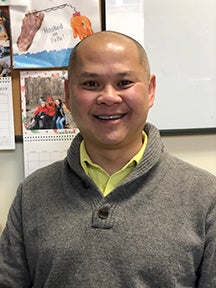
Huy Ta, PhD
Research Assistant Professor
Phone: 434-924-5951
Email: hqt7e@virginia.edu
Dr. Ta helps conduct and guide our various projects focused on defining mechanisms that mediate lung ischemia-reperfusion injury (IRI) after transplant. His current studies include evaluating the role of Piezo1 and TRPV4 channels and purinergic receptors in lung IRI. In vivo murine and in vitro pulmonary microvascular endothelial and alveolar epithelial cell models are being used. Dr. Ta also plays an important role in the research training of the surgery residents in the lab by assisting with analysis of cell, molecular and biochemical pathways after lung transplant in pigs as well as training in our murine models.
Research Assistant Professor
Phone: 434-924-5951
Email: hqt7e@virginia.edu
Dr. Ta helps conduct and guide our various projects focused on defining mechanisms that mediate lung ischemia-reperfusion injury (IRI) after transplant. His current studies include evaluating the role of Piezo1 and TRPV4 channels and purinergic receptors in lung IRI. In vivo murine and in vitro pulmonary microvascular endothelial and alveolar epithelial cell models are being used. Dr. Ta also plays an important role in the research training of the surgery residents in the lab by assisting with analysis of cell, molecular and biochemical pathways after lung transplant in pigs as well as training in our murine models.
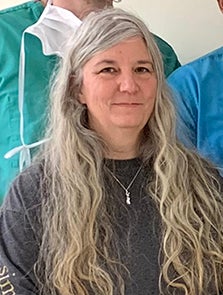
Cindy Dodson
Senior Research Specialist & Lab Manager
Phone: 434-243-2889
Email: csq3k@virginia.edu
Cindy manages the laboratory and maintains all of our animal and controlled substances protocols. She also supports all aspects of animal surgeries (especially our porcine models) and helps with mouse colony maintenance and animal protocols.
Senior Research Specialist & Lab Manager
Phone: 434-243-2889
Email: csq3k@virginia.edu
Cindy manages the laboratory and maintains all of our animal and controlled substances protocols. She also supports all aspects of animal surgeries (especially our porcine models) and helps with mouse colony maintenance and animal protocols.
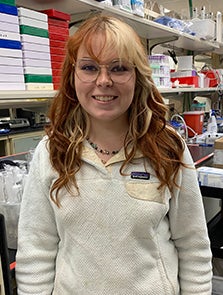
Autumn Rogers
Laboratory Specialist
Phone: 434-924-1583
Email: adr9v@virginia.edu
Autumn is supporting our large animal surgery studies such as porcine models of lung transplant, EVLP, IVLP, and ECMO.
Laboratory Specialist
Phone: 434-924-1583
Email: adr9v@virginia.edu
Autumn is supporting our large animal surgery studies such as porcine models of lung transplant, EVLP, IVLP, and ECMO.
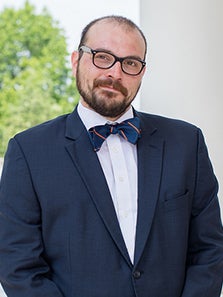
Dustin Money, RRT-ACCS
Perfusion Specialist
Email: DTM2J@uvahealth.org
Dustin was trained as a Critical Care Respiratory Therapist and ECMO Specialist and is working in our lab to support many critical aspects of our animal models of EVLP, IVLP, and ECMO.
Perfusion Specialist
Email: DTM2J@uvahealth.org
Dustin was trained as a Critical Care Respiratory Therapist and ECMO Specialist and is working in our lab to support many critical aspects of our animal models of EVLP, IVLP, and ECMO.