Search

Center for Membrane and Cell Physiology

Decoding the Physical Rules of Life to Advance Human Health

The Center for Membrane and Cell Physiology (CMCP) at the University of Virginia investigates the physical and chemical principles that govern cellular life. From membranes and proteins to dynamic molecular assemblies, we seek to understand how structure, mechanics, and interactions determine cellular function in health and disease.

Our guiding principle is clear:
To advance medicine, we must first understand the physical rules that govern living systems.

CMCP is a technology-driven scientific hub integrating high-resolution imaging, quantitative biophysics, structural biology, computational modeling, and advanced biochemical probes. By interrogating biological processes across spatial and temporal scales, we move beyond description toward predictive, mechanistic understanding.

The Center unites seven resident faculty and approximately 40 affiliated investigators across eleven departments and four schools. Together, we span fundamental discovery to clinically relevant insight, with applications in cardiovascular disease, cancer, neurological disorders, infection, and metabolic dysfunction.

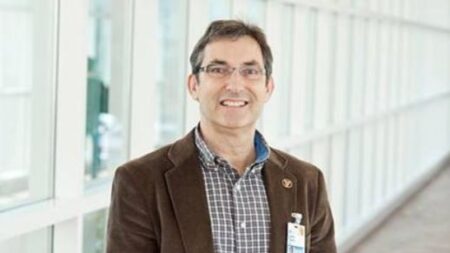
Dr. Huiwang A, Center Director

Message from the Director

Dr. Lukas K. Tamm directs the Center for Membrane and Cell Physiology. His research interests include studies on virus entry into cells by membrane fusion, neurotransmitter release at synapses by exocytosis of synaptic vesicles at nerve termini, and the study of the structures of bacterial outer membrane transporters by nuclear magnetic resonance.

Learn More

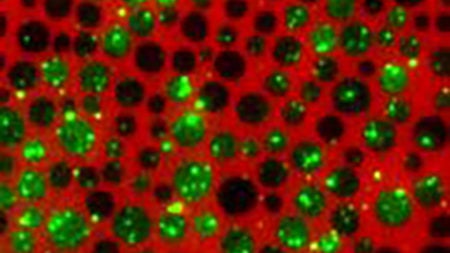
Membrane and Cell Physiology image.

Research Areas

Membrane and Cell Physiology faculty focus their research on the following areas: Membrane Transport; Membrane Fusion; Host-Pathogen Interactions; Signal Transduction; and Membrane Channels & Receptors.

Learn More

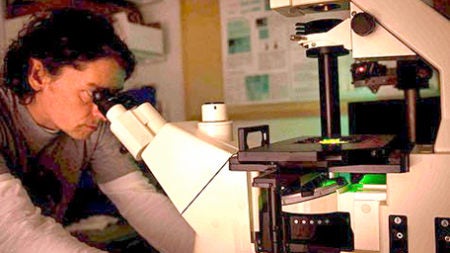
UVA Center for Membrane and Cell Physiology researcher in lab looking through microscope

Center Faculty

Our team of professionals are leaders in their fields and are consistently conducting cutting edge research in the fields of molecular and cellular biology.

Learn More

RESIDENT LABS IN THE CENTER FOR MEMBRANE AND CELL PHYSIOLOGY

Seven resident laboratories conduct research within the Center for Membrane and Cell Physiology, each pursuing a deeper understanding of cellular and membrane physiology:

Ai Lab – Developing novel molecular probes to peer into cells and brains to understand their communications.


Ebrahim Lab – Studying Cytoskeletal architecture, dynamics and roles in cellular physiology and disease; High-resolution live cell and tissue imaging.




Gan Lab – Investigating the 3-D macromolecular basis of gene regulation in eukaryotic cells.


Kenworthy Lab– Examining the role of membrane microdomains such as lipid rafts and caveolae in health and disease and the role of intracellular protein dynamics and complex formation in autophagy.




Levental Lab – Understanding the fundamental mechanisms by which membranes and dietary lipids regulate cell physiology.


Redemann Lab – Investigating the mechanisms and principles of spindle assembly and chromosome segregation.


Tamm Lab – Studying mechanisms of virus entry into cells and neurotransmitter release from neurons and insulin release from pancreatic β-cells by membrane fusion.